If your energy bills have been creeping up over the past couple of years, you're not imagining it. The average Georgia Power residential customer now pays about $171 per month — and in July, when air conditioning runs hardest, that number jumps to around $266. That's roughly $516 more per year than just two years ago.
Here's what makes that sting even more: according to the Department of Energy, roughly one-third of the energy consumed by residential buildings is wasted. And the U.S. Energy Information Administration reports that more than half — 52% — of your home's energy goes to just two things: heating and air conditioning. In Atlanta, where we run the AC six months a year or more, that share is likely even higher.
The good news? Most of that waste is fixable — and a lot of the fixes are simpler and less expensive than you'd think. This guide walks through your options from the quickest wins to the most impactful upgrades, so you can decide where to start based on your home, your budget, and your situation.
And if you read to the end, we'll show you how Georgia's Home Energy Rebates can put thousands of dollars back in your pocket when you're ready for the bigger upgrades.
In This Guide:
- Seal Drafts & Gaps
- Optimize What You Already Have
- Thermostat Settings That Save 10%
- Smart Thermostats
- Home Energy Audits
- Air Sealing
- Aeroseal Duct Sealing
- Insulation
- Ductwork Repair & Replacement
- Energy Recovery Ventilation
- Heat Pump Water Heaters
- Modern HVAC Equipment
- Heat Pumps: The Efficiency Math
- Dual Fuel Systems
- Proper System Sizing (Manual J)
- Georgia Home Energy Rebates
- Where Should You Start?
- Frequently Asked Questions
Start Simple: Things You Can Do Right Now
You don't need to call anyone or invest thousands to start saving energy. These quick wins make a real difference — and they'll help you understand where your home is losing the most before you invest in bigger upgrades.
Seal Drafts & Gaps: Weather Stripping, Caulking, and Door Sweeps
💲 Under $50
⚡ Medium Impact
🔧 DIY
Worn weather stripping and missing door sweeps can add up to the equivalent of leaving a window cracked open year-round. Replacement strips and caulk cost a few dollars and take minutes to install — one of the simplest ways to reduce air infiltration immediately.
Read more ▾
Run your hand along the edges of your exterior doors. If you feel air moving, your weather stripping is worn or missing. The same goes for door sweeps — the seal along the bottom of your door. These gaps might seem minor on their own, but added together they let conditioned air escape constantly.
While you're at it, check around window frames, where pipes or wires enter the house, and along baseboards on exterior walls. Anywhere you see daylight or feel a draft, a bead of caulk makes a noticeable difference. A tube of exterior caulk costs under $10.
These are satisfying projects you can knock out in an afternoon — and they'll reduce air infiltration immediately. For a more thorough approach to sealing your home's envelope, see our section on professional air sealing below.
Optimize What You Already Have: Fans, Filters, and Window Management
💲 Free – $20
⚡ Medium Impact
🔧 DIY
A dirty air filter forces your system to work harder every day it's clogged. Ceiling fans set to the wrong direction waste comfort. And direct sunlight through windows can raise room temps enough to keep your AC running overtime. A few quick adjustments can help.
Read more ▾
Ceiling fans: In summer, set fans to spin counterclockwise for a wind-chill effect that lets you raise the thermostat a degree or two. In winter, flip to clockwise on low to push warm air down from the ceiling. Important: fans cool people, not rooms — turn them off when you leave.
Window management: Close blinds and curtains on sun-facing windows during summer days. In winter, open south-facing curtains during the day for free solar heat, then close them at night to retain warmth.
Air filters: Check monthly and replace when visibly dirty. If you read our indoor air quality guide, you know we recommend upgrading to a MERV 13 media filter for both air quality and efficiency — but even keeping your current filter clean helps.
Thermostat Settings That Save Up to 10% Per Year
💲 Free
⚡ High Impact
🔧 DIY
The DOE says you can save up to 10% a year on heating and cooling by setting your thermostat back 7–10°F for 8 hours a day. In Atlanta's mild climate, the savings can be even higher. This is the single biggest free efficiency gain available to most homeowners.
Read more ▾
The math is simple: the smaller the difference between indoor and outdoor temperatures, the less energy your system uses. Every degree counts — roughly 1% savings per degree per 8 hours. Set your thermostat to 68°F in winter and bump it up when you leave. In summer, aim for 78°F when home and higher when you're out.
If you're still manually adjusting a basic thermostat, this is the easiest money you'll ever save. If you're ready to automate it, read on.
One note for heat pump owners: Traditional thermostat setbacks can trigger expensive electric resistance backup heat when the system tries to recover quickly. If you have a heat pump, a smart thermostat designed for heat pump use is the better approach — it manages recovery gradually to avoid kicking on the heat strips.
Not sure where your home is losing the most energy?
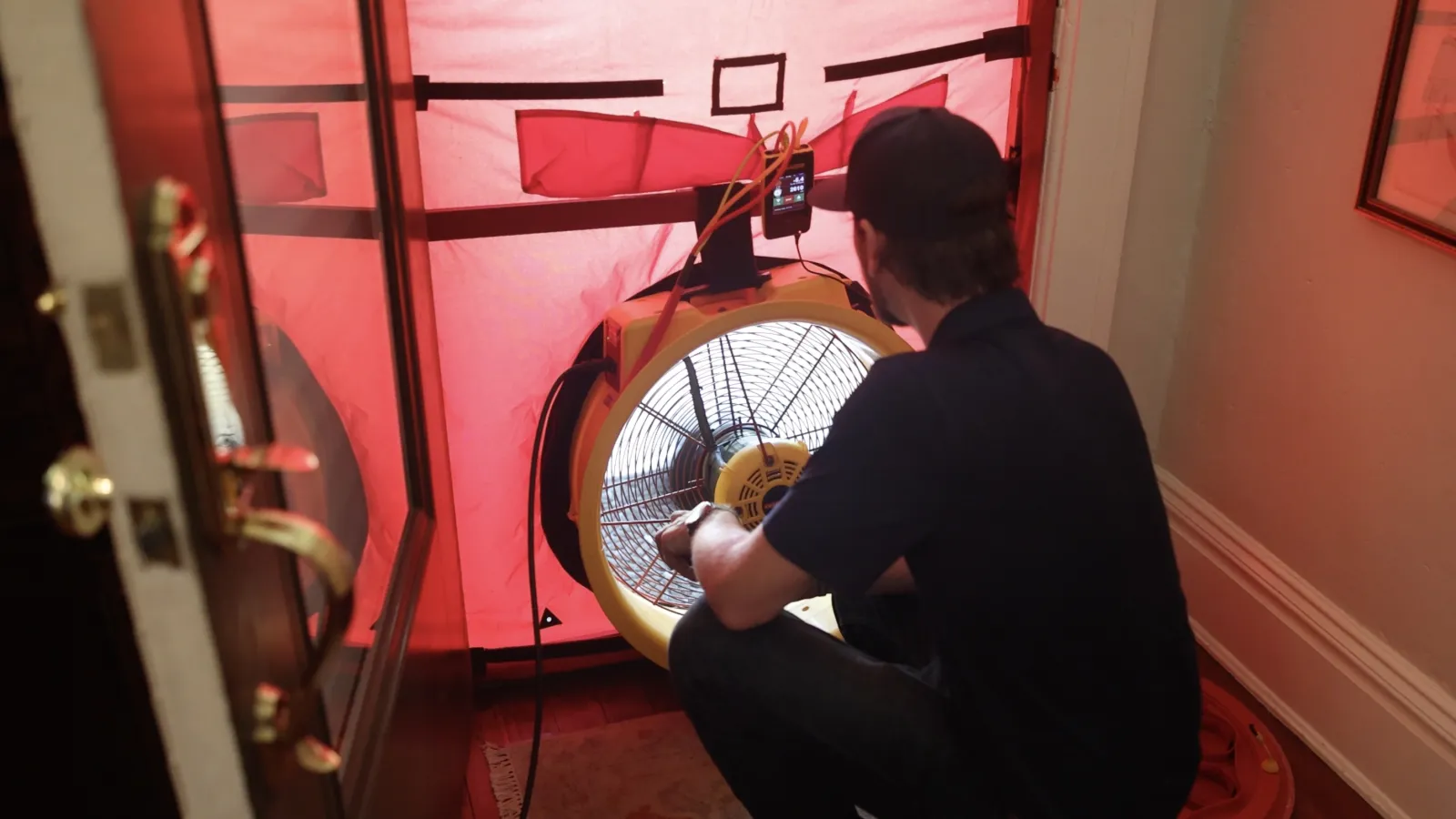
Our team uses blower door testing, thermal imaging, and energy modeling to pinpoint exactly where your biggest opportunities are — no guesswork. Many of these diagnostic services also unlock eligibility for Georgia's rebate programs.
Low-Cost Professional Upgrades
Smart Thermostats: The Upgrade That Pays for Itself
💲 $150 – $500 installed
⚡ High Impact
🛠 Professional Install Recommended
Modern smart thermostats use occupancy sensors to detect when you're home and adjust automatically. Some learn your patterns over time. Most pay for themselves within a year or two through energy savings alone — but proper setup matters more than you'd think.
Read more ▾
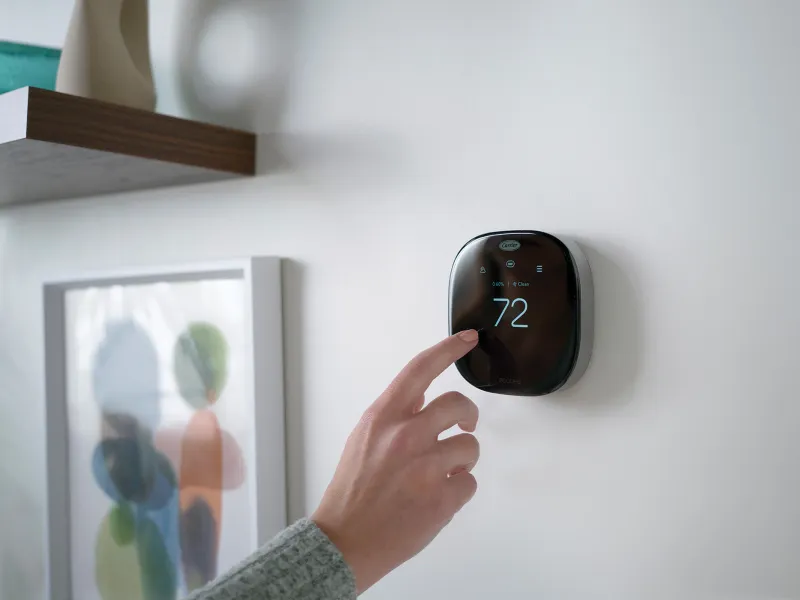
The latest models from Carrier, Ecobee, and Google Nest go beyond scheduling. They use occupancy sensors, learning algorithms, and remote sensors for room-by-room temperature priorities — especially helpful in two-story homes where the upstairs always runs warmer.
Because they connect to your phone, you can see exactly how much your system is running, make adjustments from anywhere, and catch potential problems early — like a system running nonstop that might signal a maintenance issue.
We install and configure smart thermostats as part of our regular service. Proper setup matters especially with heat pumps and multi-stage equipment, where the wrong thermostat settings can actually hurt efficiency by triggering expensive backup heat unnecessarily.
The Building Envelope: Where the Biggest Hidden Waste Lives
Your home's "envelope" — the walls, attic, floors, windows, and doors that separate conditioned space from the outside — is the single biggest factor in how much energy your HVAC system uses. A tight, well-insulated envelope means your equipment runs less. A leaky one means you're paying to heat and cool the outdoors.
Home Energy Audit: The Diagnostic Starting Point
💲 $$
⚡ Foundation for Everything Else
🛠 Professional Service
🏷️ Required for HER Rebate
Every home loses energy differently. An energy audit uses blower door testing, thermal imaging, and energy modeling to identify exactly where your biggest opportunities are — and it's a required step for Georgia's HER rebate program, which means it can directly unlock thousands in savings.
Read more ▾
Our team uses diagnostic tools including blower door testing (which pressurizes your home to measure total air leakage), thermal imaging (which reveals hidden heat loss through walls, ceilings, and around windows), and duct leakage testing to build a complete picture of your home's performance. We also measure ventilation rates and check combustion safety to ensure any tightening we recommend won't create other issues.
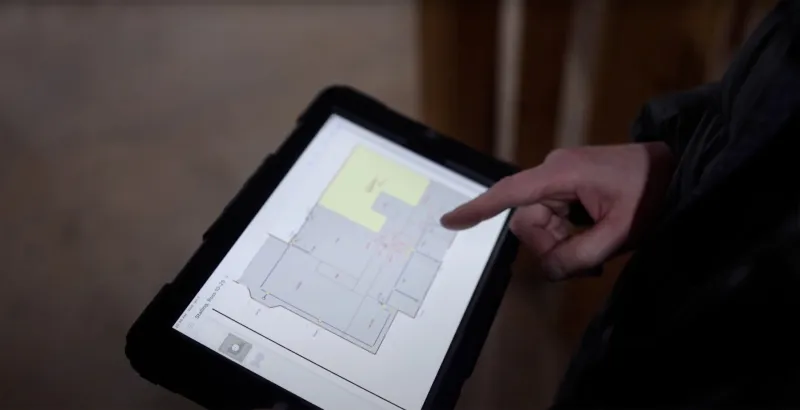
We then use GEFA-approved energy modeling software to calculate your current energy use and project how much each potential upgrade would save. The result is a custom prescription plan — a prioritized list of improvements ranked by impact and return on investment.
The energy model also proves whether your combined upgrades hit the 20% or 35% energy reduction thresholds that unlock the biggest HER rebates. As BPI-certified contractors and approved HER/HEAR partners, we know exactly how to target upgrades that maximize both savings and rebate eligibility.
Learn more about PV's home energy audits →

Air Sealing: Stop Paying to Heat and Cool Your Attic
💲 $$
⚡ Very High Impact
🛠 Professional Service
🏷️ Rebate Eligible (HEAR/HER)
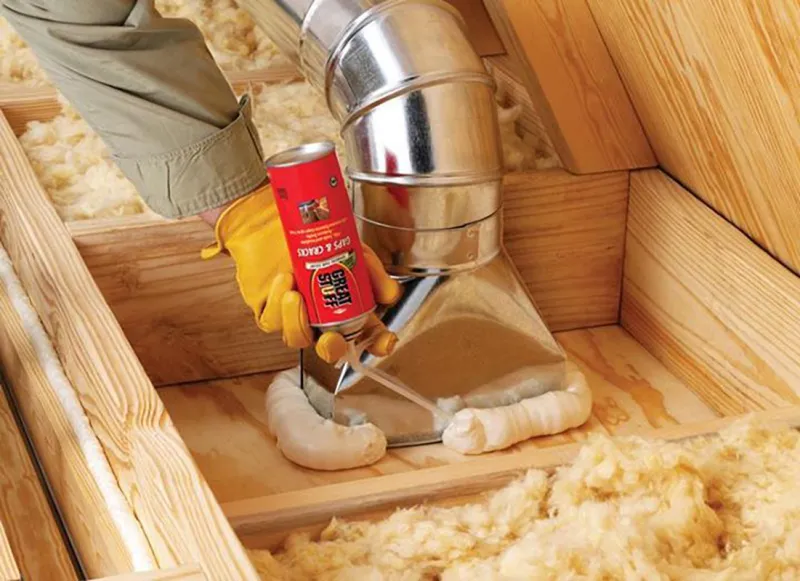
Gaps around recessed lights, plumbing pipes, and electrical wiring in your attic can add up to the equivalent of leaving a window open 24/7. Air sealing closes these invisible pathways, keeping conditioned air in and hot attic air out. It's one of the most cost-effective professional upgrades available.
Read more ▾
Our air sealing service systematically locates and closes gaps throughout your attic — around recessed light fixtures, plumbing vent pipes, electrical penetrations, HVAC boots, and anywhere ductwork passes through framing. The result is a tighter building envelope that reduces HVAC runtime and often improves comfort immediately, especially in rooms that always seem too hot or too cold.
It also improves air quality, since sealed penetrations stop unfiltered attic air from entering your living space. We covered this in detail in our indoor air quality guide — here's the energy angle: every cubic foot of conditioned air that leaks out is a cubic foot your system has to re-condition. Sealing those leaks means your equipment runs less, lasts longer, and costs less to operate.
Air sealing qualifies for rebates under both the HEAR program ($1,600 combined with insulation) and the HER program (as part of a whole-home project targeting 20%+ energy savings).
Aeroseal Duct Sealing: Find and Fix the Leaks You Can't See
💲 $$
⚡ Very High Impact
🛠 Professional Service
🏷️ Rebate Eligible (HER)
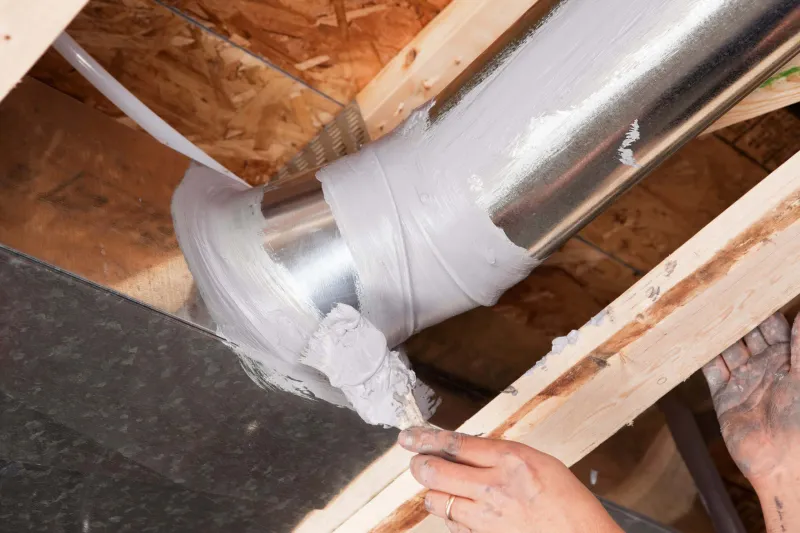
The DOE estimates the typical home loses 20–30% of conditioned air through duct leaks — that's up to a third of the air you're paying to heat or cool that never reaches your rooms. Aeroseal seals those leaks from the inside out, even in areas hidden behind walls, and gives you a before-and-after report with exact data.
Read more ▾
We use Aeroseal — a technology developed at Lawrence Berkeley National Laboratory — to seal duct leaks from the inside out. The process starts with a pressurization test that measures exactly how much air your duct system is losing. Then, a non-toxic aerosol sealant is injected into the pressurized ducts, where the particles automatically seek out and seal every leak.
You get a computerized before-and-after report showing exactly how much leakage was eliminated. The seal is warranted for 10 years and has been tested to last over 40.
Our technicians run a pressure test on your supply and return ducts before recommending anything. If your system is tight, we'll tell you. If it's not, we'll show you the data.
Insulation: The Thermal Barrier That Locks Everything In
💲 $$ – $$$
⚡ Very High Impact
🛠 Professional Install
🏷️ Rebate Eligible (HEAR/HER)
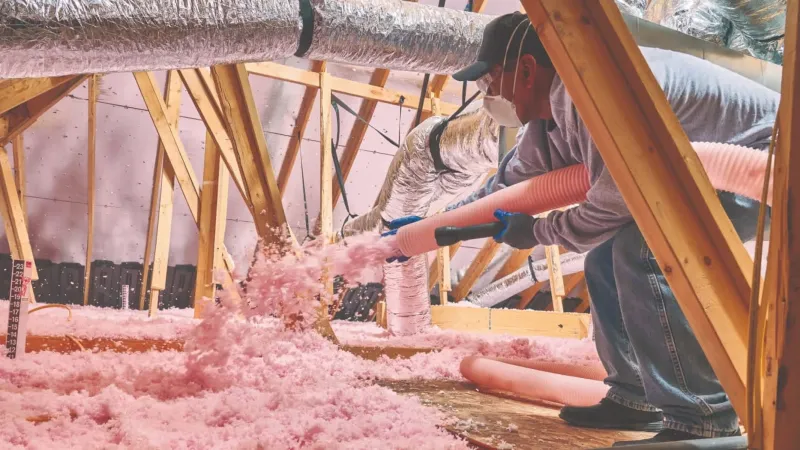
Your attic can exceed 150°F in an Atlanta summer. Adequate insulation creates the thermal barrier between that extreme heat and your living space. In many older homes, insulation has settled or was never installed to current standards — and the order matters: air seal first, then insulate.
Read more ▾
Air seal first, then insulate. Insulation on top of unsealed penetrations still lets air move through it — think of wearing a sweater on a windy day without a windbreaker. Air sealing is the windbreaker. Insulation is the sweater. You need both, and they work best in that order.
In many Atlanta-area homes — especially those built more than 15–20 years ago — attic insulation has settled, degraded, or was never installed to current standards for our climate zone. Upgrading insulation after air sealing provides a proper thermal blanket that holds temperature more consistently, reduces HVAC runtime, and eliminates those rooms that were always too hot in summer or too cold in winter.
Insulation qualifies for rebates under both HEAR ($1,600 combined with air sealing) and HER (as part of a whole-home project).
Your Delivery System: Ducts and Ventilation
Even the best equipment and the tightest envelope won't perform if the system delivering conditioned air to your rooms has problems.
Ductwork Repair & Replacement: The Hidden Bottleneck
💲 $$ – $$$$
⚡ High Impact
🛠 Professional Service
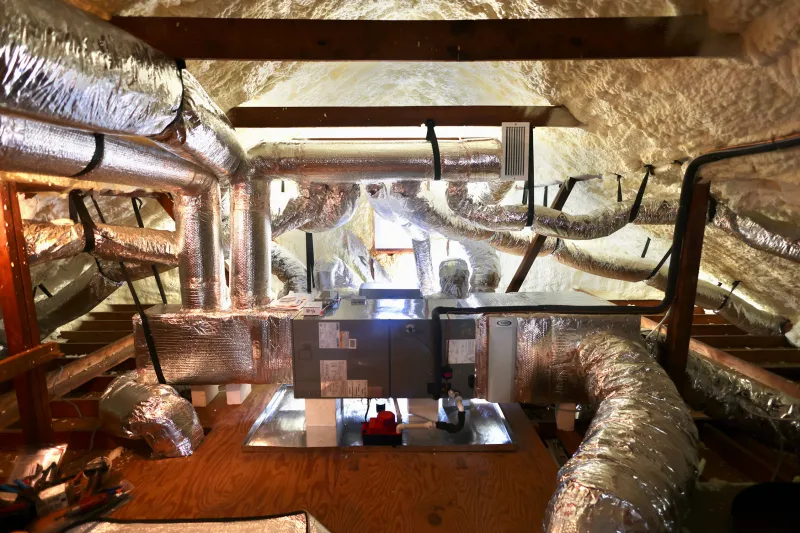
You can have the most efficient equipment in the world, but if the ductwork delivering air is crushed, disconnected, or undersized, you'll never feel the difference. Swapping equipment without addressing ducts is like putting a new engine in a car with flat tires — and it's one of the most common shortcuts in the industry.
Read more ▾
In many homes — especially those where the builder installed ductwork to minimize cost, not maximize performance — problems like crushed flex duct in attics, undersized return air pathways, and long, restrictive runs are quietly robbing you of efficiency and comfort every day.
At PV, we evaluate ductwork as part of every whole-home assessment. We measure static pressure, check airflow at each register, and identify restrictions or damage. When ductwork needs repair, modification, or replacement, we design the solution around your home's actual load requirements — not rules of thumb.
This is where most HVAC companies stop short. We see it regularly: brand-new equipment underperforming because nobody addressed the ducts delivering the air. It's one of the main reasons we take a whole-home approach to every project.
Energy Recovery Ventilation (ERV): Fresh Air Without the Energy Penalty
💲 $$$
⚡ High Impact
🛠 Professional Install
No filter can remove CO₂, cooking odors, or VOCs — those need to be exhausted. An ERV swaps stale indoor air for filtered fresh air while recovering up to 80% of the heating or cooling energy from the outgoing air. It's especially important in tight, modern homes where your system can create negative pressure problems.
Read more ▾
An Energy Recovery Ventilator continuously swaps stale air for filtered fresh air while recovering up to 80% of the energy from the outgoing air. Fresh air arrives pre-cooled and dehumidified in summer, pre-warmed in winter.
Tight homes especially need this. Without balanced ventilation, your HVAC system can pull air down through the fireplace chimney, through wall cavities, or pull exhaust fumes back indoors. An ERV keeps your home in pressure equilibrium. Some parts of the country now require ERVs in new construction for exactly this reason.
We covered ERVs in depth in our indoor air quality guide. We install ERVs as standalone systems or integrated with your existing HVAC — the right method depends on your home.
Heat Pump Water Heaters: Cut Water Heating Costs by Up to 70%
💲 $$$
⚡ High Impact
🛠 Professional Install
🏷️ $1,750 HEAR Rebate
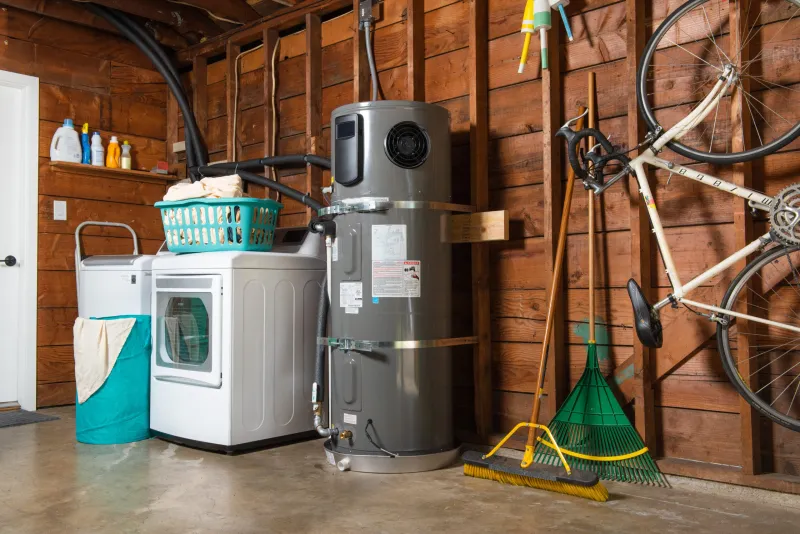
Water heating is your second-largest energy expense — about 12% of your total bill. Heat pump water heaters are two to three times more efficient than conventional electric models, and Georgia's HEAR program offers $1,750 back. Combined with the energy savings, these units pay for themselves fast.
Read more ▾
Heat pump water heaters use the same principle as an HVAC heat pump: they move heat from the surrounding air into the water rather than generating heat directly. This makes them dramatically more efficient and can cut water heating costs by up to 70%.
They also provide a bonus in summer: since they pull heat from the surrounding air, they slightly cool and dehumidify the space they're installed in — a nice perk in Atlanta's humidity if your unit lives in a garage or utility room.
We install heat pump water heaters as part of our plumbing services. As an HVAC company, we're better equipped than most plumbers for ensuring proper airflow requirements, combustion safety, and system integration.
Equipment: What's Changed in Modern HVAC
Variable-Speed Inverter Technology: A Different Kind of Efficiency
💲 $$$$
⚡ Very High Impact
🛠 Professional Install
🏷️ Rebate Eligible (HEAR/HER)
A system from the mid-2000s might be rated at 10 SEER. Today's best systems exceed 20 SEER. But the real leap isn't just higher numbers — it's how the equipment runs. Older systems blast at 100% then shut off. Modern variable-speed systems run low and steady, delivering consistent comfort with dramatically less energy.
Read more ▾
Older single-stage systems cycle on at full blast, overpower the space, shut off, let the temperature drift, then blast again. This wastes energy, creates hot and cold spots, and wears the equipment faster.
Modern variable-speed systems — like the Carrier Infinity series with Greenspeed Intelligence — use inverter-driven compressors that ramp up and down to match your home's precise needs. Instead of cycling at 100%, they run at 30–80% most of the time. The comfort difference is dramatic: more consistent temperatures, better dehumidification, fewer hot and cold spots, and whisper-quiet operation.
We're not here to push early replacement. But if your system is aging or costing more every year, it's worth understanding how much the technology has changed. For a deeper dive, read our heat pump buying guide.
Heat Pumps: Why the Efficiency Math Is Different Than You Think
💲 $$$$
⚡ Very High Impact
🛠 Professional Install
🏷️ Up to $10,500 HEAR Rebate
A gas furnace burns fuel at about 96% efficiency — impressive, but that's the ceiling for combustion. A heat pump doesn't burn anything — it moves heat — and can deliver 3 to 4 times more heating energy than the electricity it consumes. That's the equivalent of 300–400% efficiency. But energy efficiency and cost efficiency aren't the same thing.
Read more ▾
At 47°F outside, a modern heat pump typically operates at a COP (Coefficient of Performance) of 3 to 4. For every unit of electricity you pay for, you get 3 to 4 units of heat. Compare that to even the best gas furnaces at ~0.96 COP.
So why isn't everyone switching? Two reasons. As temperatures drop, heat pump efficiency drops too. Conventional units rely on electric resistance backup heat (aux heat strips) in very cold weather — and those strips operate at a COP of just 1, essentially a giant space heater that's extremely expensive to run. Second, natural gas is relatively cheap in Georgia right now. A heat pump uses less energy, but the cost to run a high-efficiency gas furnace is comparable because gas is cheaper per unit than electricity.
What's changed: Cold climate heat pumps. These inverter-driven systems maintain high efficiency well below freezing — some rated to -15°F. In Atlanta, they handle virtually the entire heating season without needing backup strips, eliminating the biggest cost penalty.
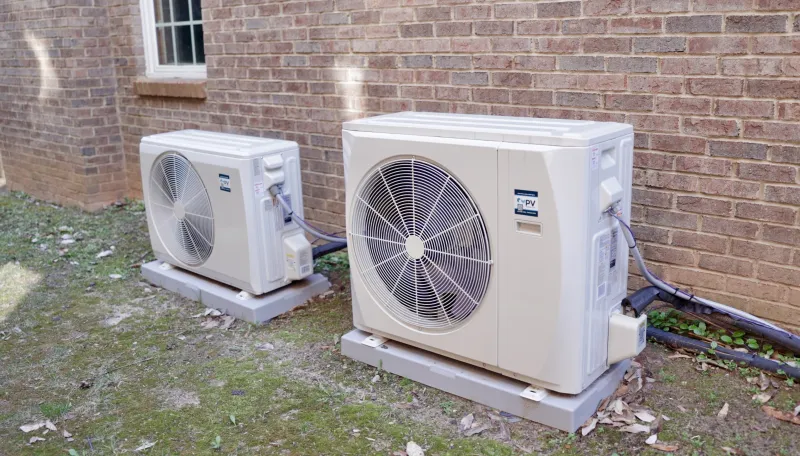
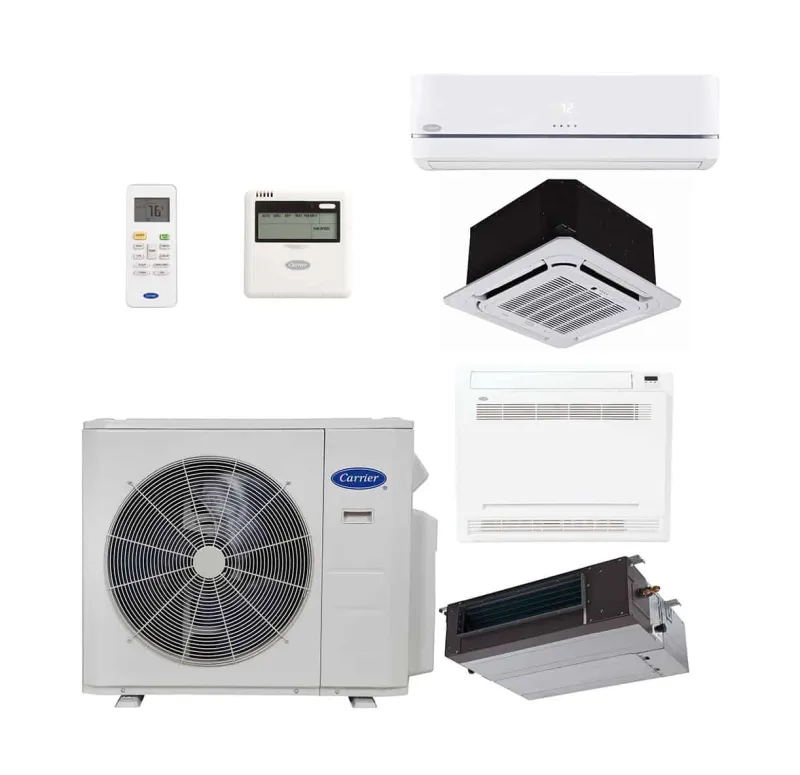
Ductless mini-splits also deserve a mention — often 20+ SEER and 12+ HSPF since they eliminate duct losses entirely. Excellent for additions, bonus rooms, garages, and sunrooms.
Dual Fuel Systems: The Best of Both Worlds
💲 $$$$
⚡ Very High Impact
🛠 Professional Install
🏷️ Up to $10,500 HEAR Rebate
A dual fuel system pairs a heat pump with a gas furnace. The heat pump handles 90%+ of the year. On the coldest nights, it automatically switches to gas. Some advanced systems even factor in real-time utility rates to choose whichever fuel is cheapest at that moment — and most homeowners are seeing up to $10,500 off through Georgia rebates.
Read more ▾
For homeowners who want heat pump efficiency but aren't ready to go all-electric, a dual fuel (hybrid) system is a compelling middle ground. You get heat pump efficiency when conditions favor it, gas furnace reliability when they don't.
The part most people don't realize: dual fuel systems qualify for Georgia's HEAR rebate, which can put up to $10,500 back at the point of sale (including $8,000 for the system and $2,500 for any electrical upgrades needed for the conversion). You don't have to go all-electric.
To learn more about how these systems compare, read our heat pump buying guide.
Proper System Sizing (Manual J Load Calculation): Why It Makes or Breaks Everything
💲 Included with PV installations
⚡ Critical
🛠 Professional Engineering
A Manual J is an engineering calculation that determines exactly how much heating and cooling your home needs — based on square footage, insulation, windows, and more. An oversized system wastes energy and can't dehumidify properly. An undersized one can't keep up. Most contractors skip this step. PV performs one on every installation and backs it with a sizing guarantee.
Read more ▾
Why does this matter? An oversized AC cools too quickly, shutting off before it's properly dehumidified your home. The result: a cold, clammy house that never feels comfortable and a system that cycles excessively — wasting energy and wearing out faster. An undersized system runs constantly and still can't keep up on the hottest or coldest days.
Most contractors size equipment based on rules of thumb or by matching the old unit's tonnage. At PV, we perform a Manual J load calculation on every installation. It's one of the biggest differences between a quality install and a "box swap" — and it's why we offer a sizing guarantee: if the system we install can't heat or cool your home within the promised range, we'll replace it at our cost.
If you've invested in air sealing and insulation, a Manual J is especially important — your home's load has changed. The system that was right for your leaky, under-insulated house may now be too large for your tighter, better-insulated one.
Georgia Home Energy Rebates: The Math Changes
If you've been reading this thinking some of these upgrades sound like a significant investment — this is the section that changes the equation.
Georgia's Home Energy Rebates are currently available through two programs, and PV is a Georgia Rebates partner — the #1 rebates contractor in the state. We handle the rebate paperwork so you can focus on the savings.
The HEAR Program (Income-Based): HEAR provides point-of-sale rebates for homeowners earning up to 150% of Area Median Income. Up to $8,000 for a qualifying heat pump or dual fuel system — plus an additional $2,500 for electrical upgrades if needed to convert to a heat pump, bringing the total to $10,500 off a new system for most homeowners. HEAR also offers $1,600 for insulation and air sealing, and $1,750 for a heat pump water heater. For households under 80% AMI, the rebate can cover up to 100% of project costs.
The HER Program (Performance-Based): HER rewards whole-home efficiency improvements. Achieve 20% modeled energy savings and qualify for $2,000 to $10,000. Hit 35% and rebates go up to $4,000 to $16,000. This is where PV's whole-home approach pays off — many of the upgrades in this guide stack together to reach those thresholds.
Important: these rebates are first-come, first-served, and remaining funds are expected to run out.
For details, visit our Georgia Home Energy Rebates page, or read our guides to the HEAR program, the HER program, income eligibility, the step-by-step application process, and approved contractors.
Where Should You Start?
If you want to do something today: Adjust your thermostat schedule, change your filter, and weather-strip your doors.
If you're ready for a small investment: Upgrade to a smart thermostat.
If you want to address the biggest hidden waste: Air sealing, Aeroseal, and insulation deliver the highest returns — and they improve indoor air quality at the same time.
If your equipment is aging: Explore modern variable-speed and heat pump options, especially while Georgia's rebates are still funded.
If you're not sure: That's exactly what we're here for.
Give us a call at 404-798-9672 or schedule a consultation online. We'll look at your home, your equipment, your ductwork, and your energy bills — then recommend what makes the most sense for your situation. No pressure, no cookie-cutter proposals. Just honest guidance from a team that's been doing this across metro Atlanta since 2008.
Because at PV, we believe you shouldn't have to choose between comfort and cost.
The Science of Comfort®
Frequently Asked Questions
How much can I save by air sealing and adding insulation?
It varies by home, but the DOE estimates that sealing air leaks and improving insulation can save 15% or more on heating and cooling costs. For a home spending $2,000+ per year on energy, that's meaningful — and the work often qualifies for Georgia rebates that offset much of the cost.
What's the difference between energy efficiency and cost efficiency?
Energy efficiency measures how much useful heating or cooling you get per unit of energy. Cost efficiency measures what you pay based on current rates. A heat pump is more energy-efficient (COP of 3–4 vs. ~0.96 for a furnace), but because gas is cheaper per unit in Georgia right now, operating costs can be similar. Which matters more depends on your priorities.
Is a heat pump worth it in Georgia?
For most homes, yes — especially now. Modern cold climate heat pumps perform well year-round, and Georgia's HEAR rebate can put up to $10,500 back at the point of sale (including $2,500 for electrical upgrades if needed). For a detailed comparison, read our heat pump buying guide.
What is Aeroseal and is it worth the investment?
Aeroseal seals duct leaks from the inside using a non-toxic aerosol sealant. The DOE estimates typical homes lose 20–30% of conditioned air through duct leaks. You receive a before-and-after report with exact data, and the seal is warranted for 10 years.
Do I need to replace my HVAC system to save energy?
Not necessarily. Many of the biggest gains come from the building envelope — air sealing, duct sealing, and insulation. If your system is newer, improving the envelope can dramatically boost performance without replacement. If it's 15–20 years old, modern equipment is significantly more efficient, especially with current rebates.
What is a Manual J load calculation?
A Manual J determines exactly how much heating and cooling capacity your home needs based on square footage, insulation, windows, and more. It ensures proper sizing — critical for efficiency, comfort, and equipment lifespan. PV performs one on every installation and backs it with a sizing guarantee.
What are the Georgia Home Energy Rebates?
Two programs: HEAR provides income-based rebates (up to $8,000 for heat pumps plus $2,500 for electrical upgrades — $10,500 total for most homeowners, $1,750 for water heaters, $1,600 for air sealing/insulation). HER rewards whole-home projects achieving 20–35% savings ($2,000–$16,000). PV is the state's #1 rebates contractor. Funds are first-come, first-served.
Can I combine upgrades to maximize my rebate?
Absolutely. The HER program specifically rewards combined projects hitting 20% or 35% whole-home savings. Stacking air sealing, insulation, duct sealing, and a heat pump is the path to the highest tiers. An energy audit models the savings so you know what to expect before committing.