If you're considering a heat pump for your Georgia home, you're in the right place.
In this heat pump buying guide, we'll cover heat pump basics, pros and cons, types of heat pumps, and whether they're more energy efficient than what you've got today. We will also consider how Georgia's energy rebate programs can help you save on a new heat pump system for your home.
Program update (August 2026): Georgia's rebate programs are changing. The Home Efficiency Rebates (HER) program is open now at every income level, and the state is preparing to relaunch the HEAR program with new eligibility rules. Details can change quickly, so the fastest way to find out exactly where your home stands is to check your rebate tier or talk with a PV customer advocate.
What is a heat pump?
Here in the Atlanta area, most people are accustomed to using an air conditioner during summer and a furnace in the winter. How is a heat pump similar… or different?
We'll start with how it cools your home in summer. When it's hot outside, a heat pump actually works exactly the same as an air conditioner.
Just set your thermostat to "cool," set the temperature, and let the heat pump do its thing! It will remove heat from your home and cool things down the same as you're used to with your current AC (although it will likely be more efficient, but more on that later).
The reason ACs and heat pumps work so similarly is because an air conditioner is a type of heat pump! The difference is that a heat pump can also heat your home during the winter.
When it's cold outside and you set your thermostat to "heat," a heat pump does the opposite of what an air conditioner does. To heat your home, it removes heat from the outdoors and "pumps" it inside your house. This is different from a furnace because:
- The heat pump does not burn fuel on site.
- It relies completely on electricity, not natural gas.
- There are no combustion safety or carbon monoxide concerns.
You might find other subtle differences between a heat pump and a furnace. If you're used to a furnace blasting your home with hot air, you'll probably notice that the heat from a heat pump is less scorching. Some people prefer this because heat pumps tend not to dry out the air (or their skin) as much as a gas furnace.
Ultimately, both systems, heat pumps and furnaces alike, are capable of heating your home to the temperature you specify on your thermostat. The difference is in how each one provides heat and the type of fuel each uses.
Why buy a heat pump?
So, now that you know how a heat pump works… should you buy one?
In 2026, we think a heat pump is a great option for most homes, most of the time.
That's a pretty bold statement, and it's not one we would have made, say, a couple of years ago. But a few things have changed.
Georgia heat pump rebates
For starters, Georgia created two rebate programs that help homeowners save thousands of dollars on a new heat pump: The Home Energy Rebates (HER) program and the Home Electrification and Appliance Rebates (HEAR) program.
The HER program is open right now. It offers rebates on a sliding scale based on household income, and heat pump installation is a HER-eligible home improvement. You can save thousands when a heat pump is installed as part of a series of upgrades that reduce your home's overall energy consumption by 20% or more. The HEAR program is temporarily closed to new applications while the state prepares a relaunch with new eligibility rules. No reopening date has been announced, but our team can pre-qualify you now so your application is ready the moment it opens.
These programs make getting a replacement HVAC system less expensive than any time in recent memory, especially if you choose a heat pump!
More efficient, higher performing heat pumps
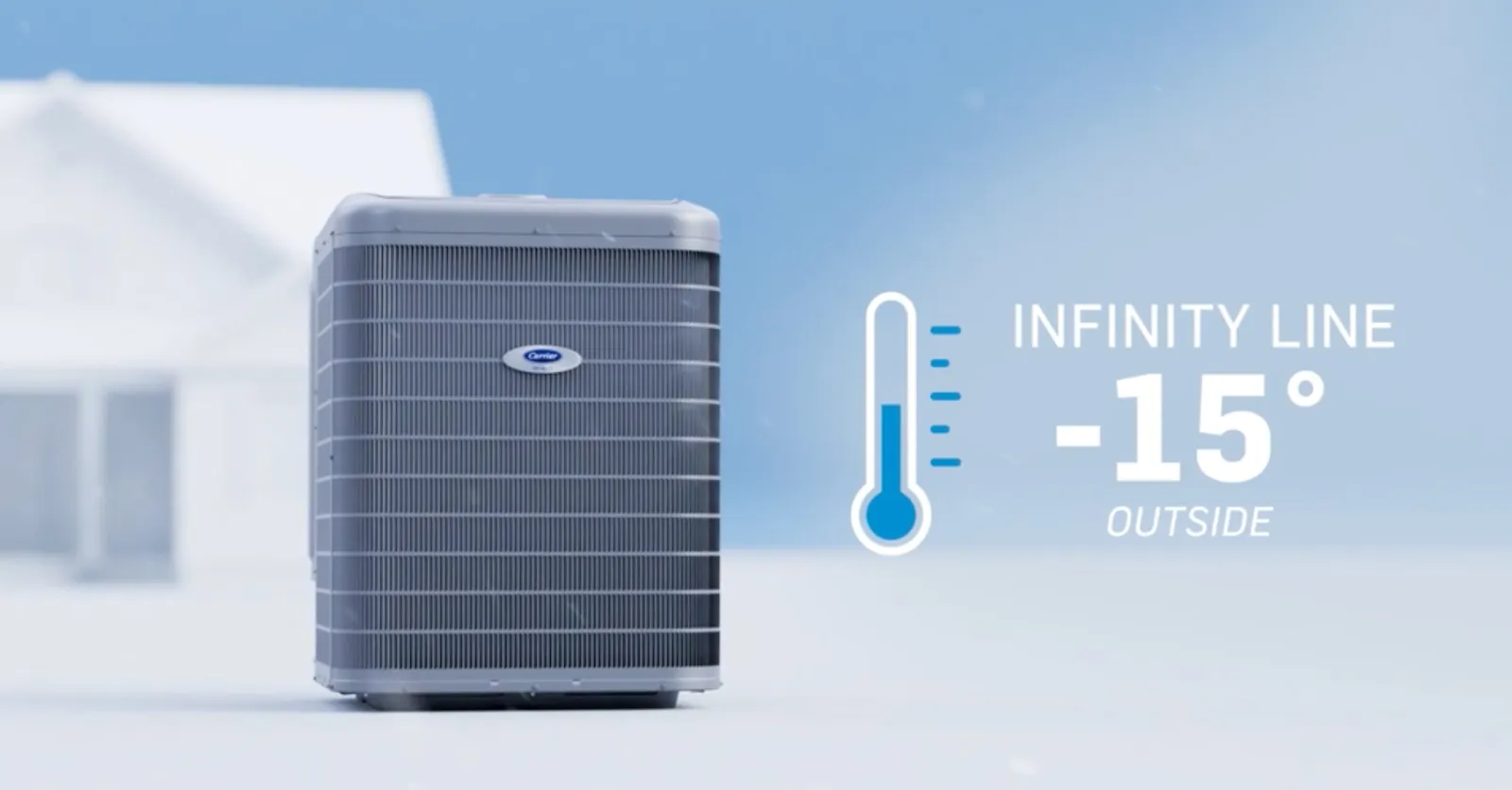
Another thing that's changed is that cold climate heat pumps hit the market. These systems are significantly more efficient than conventional heat pumps.
Even though we don't live in a climate that's generally considered cold, homeowners in the Atlanta area can benefit from using one of these modern units. Unlike conventional heat pumps, the cold climate units perform efficiently even when outdoor temperatures are well below freezing. As a result, they use less energy. They're also super quiet compared to typical heat pumps.
Cold climate and variable speed heat pumps also offer benefits during the summer months. Since they rely on variable speed compressors that ramp up and down to meet your home's precise cooling needs, they provide more even and consistent cooling than standard units.
They also do a much better job of dehumidifying your home compared to a conventional air conditioner. In our humid climate, a drier home is a wonderful thing!
What about energy savings?
Any new heating and cooling system, whether it includes a furnace or a heat pump, is likely to be much more efficient than whatever you're replacing. This is true even if you opt for a conventional heat pump over a cold climate model.
Whether heat pumps as a category use less energy than furnaces is debatable.
At the time of writing, the price of natural gas is quite low. All else being equal, a new high efficiency furnace will probably cost about the same amount of money to operate as a new heat pump.
Of course, you're less likely to qualify for rebate savings with the furnace. But in terms of operating costs, they're pretty much even.
Heat pumps are still a better deal for most people because of rebates, but it's hard to say whether they actually use less energy than furnaces or cost less to run.
However, if environmental concerns are a priority for you, a heat pump is definitely the way to go! Electricity is increasingly becoming cleaner, and a heat pump will never burn any gas.
Types of heat pumps available
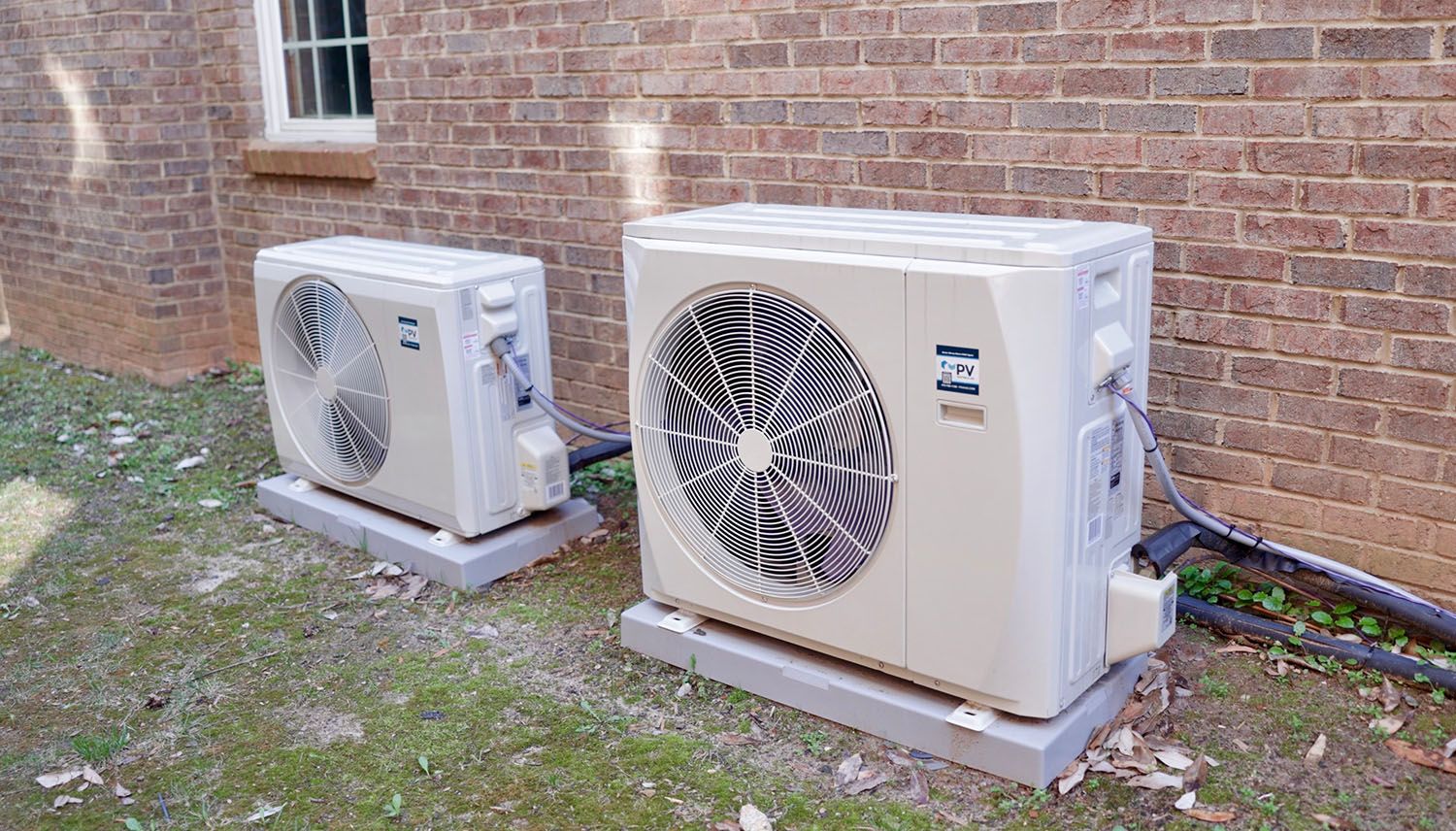
Let's compare heat pump models and types. There are four main categories of heat pumps:
- Conventional single-stage heat pumps: These units turn on to heat or cool your home and turn off when the indoor temperature matches the thermostat setting. They always run at full speed when heating or cooling. Conventional heat pumps also rely on heat strips (aka auxiliary heat or backup heat) on the coldest days and nights, which can increase your energy costs.
- Two-stage heat pumps: While similar to conventional heat pumps, these systems have two speeds: a high speed and a low speed. Most of the time, they run at the lower speed, providing consistent heating or cooling throughout the day. When it's really hot or really cold outside, they switch to the higher speed. The higher speed is the same as the conventional heat pump's speed and uses the most energy.
- Variable speed heat pumps: These heat pumps are much more efficient than the first two types. They run almost constantly at low-to-medium speeds and ramp up and down to meet your precise heating or cooling needs. As a result, they're way more efficient and provide much better indoor comfort.
- Cold climate variable speed heat pumps: This is the highest performing type of heat pump. Cold climate units, sometimes called hyper-heat systems, rely on a modern inverter design. They're like variable speed units but even more efficient and more capable during really cold weather.
When it comes to conventional heat pumps, something to keep in mind is that they're designed to bring indoor temperatures to the 70s on a 24-degree day.
That matters because it occasionally gets colder than that in Atlanta!
When outdoor temperatures slide into the teens or below, conventional single or two-stage heat pumps might not heat your home as well as you would like. They'll still heat your home, and it's reasonable to expect them to keep temperatures in the 60s, but they won't perform as well as they usually do.
Conventional heat pumps also rely on heat strips when outdoor temperatures drop below freezing. Heat strips turn on when the system can't pull enough heat from the outdoor environment to heat your home. There's nothing wrong with heat strips, and they work fine, but they're very expensive to operate.
Cold climate heat pumps, unlike other types, remain efficient and effective even when temperatures drop below zero. No matter how cold it gets in Atlanta, you can feel confident that a cold climate heat pump is more than capable of keeping you comfortable and using significantly less energy than conventional systems.
Rebates for heat pumps
We already mentioned the Georgia HER and HEAR rebate programs, but these rebates are so impactful that it warrants repeating.
The HER program is open at every income level. To qualify, you perform eligible home improvements that result in at least a 20% reduction in energy consumption. Installing a heat pump is one HER-qualified home improvement. Your total rebate for all HER-eligible improvements can be as high as $16,000 for income-qualified households, with smaller rebates available at higher incomes.
The HEAR program has historically offered income-based rebates on heat pumps, but it is temporarily closed to new applications while the state finalizes a new version with updated eligibility rules. We are tracking every update, and our customers will be first in line when it reopens.
To learn more about the nuts and bolts of these programs, see our other articles about:
- Georgia's HEAR program
- Georgia's HER program
- Eligibility for HEAR and HER rebates
- The step-by-step process for getting your Georgia energy rebate
- Qualified contractors for HEAR and HER programs
You can also use our rebate tier checker to see which HER rebate tier your household falls into. It takes about 10 seconds, with nothing to type.
Keep in mind that this is just a starting point. To pin down your maximum rebate, contact a PV customer advocate today!
Other incentives for heat pumps
Right now, you can also stack manufacturer savings on top of any Georgia rebate you qualify for. Through November 20, 2026, Carrier Cool Cash offers up to $2,100 in rebates on qualifying Carrier Infinity® and Performance™ systems, including heat pumps, plus 0% APR financing for 60 months with approved credit. Unlike the state programs, Cool Cash requires no application from you. The rebate comes right off your invoice at the time of sale.
One heads-up: the federal 25C tax credit for heat pumps expired at the end of 2025, so if you read about a 30% federal tax credit elsewhere, that information is out of date. The good news is that between HER, the upcoming HEAR relaunch, and Carrier Cool Cash, the savings opportunities in Georgia are still substantial.
That is why 2026 remains a great year to buy a heat pump.
Why choose PV for your heat pump installation?
With the basics covered, you might be wondering how to replace the heating and cooling system in your Georgia home with a heat pump.
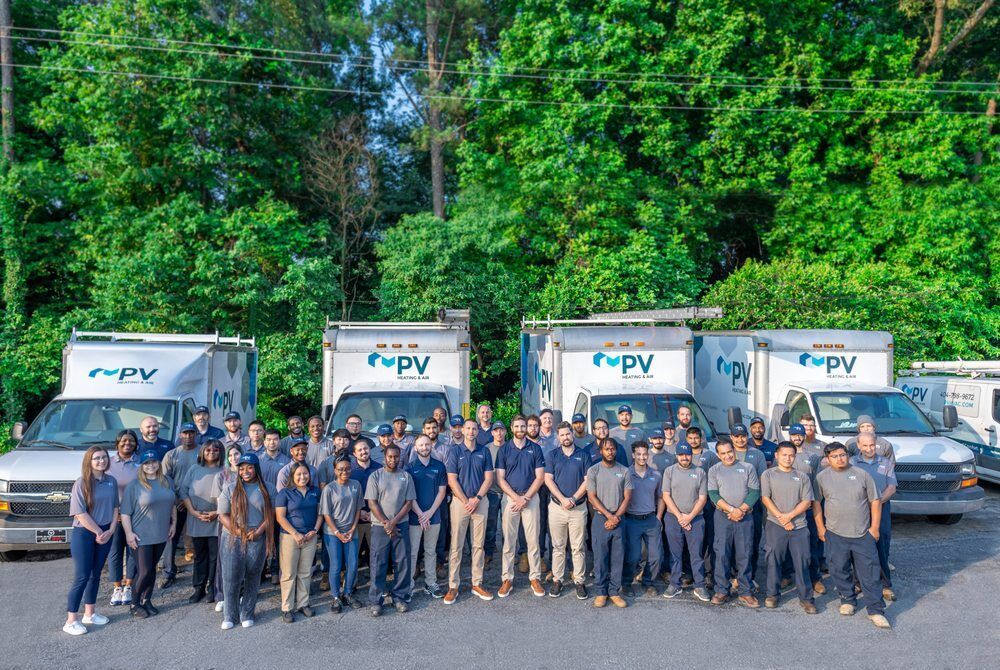
If you're ready to discuss a new heat pump for your Atlanta area home, you want a contractor who performs the best possible installation and who is approved to participate in the HEAR and HER rebate programs.
In addition to being approved contractors for both programs, we're heat pump experts who deliver the highest possible installation, no matter what. Our highly trained team always does the pre and post-installation legwork required to ensure your new heat pump performs at the highest level for as long as possible.
We're a family business that believes you deserve the same high quality HVAC service we insist on for our own homes!
To help you get the maximum savings from Georgia's rebate programs, we've built a Customer Advocate Center for prospective customers. A PV customer advocate can help you determine your highest available rebate for your new heat pump, both now and when HEAR reopens!
To find out more or determine your eligibility for HEAR and HER rebates, contact a PV customer advocate today!