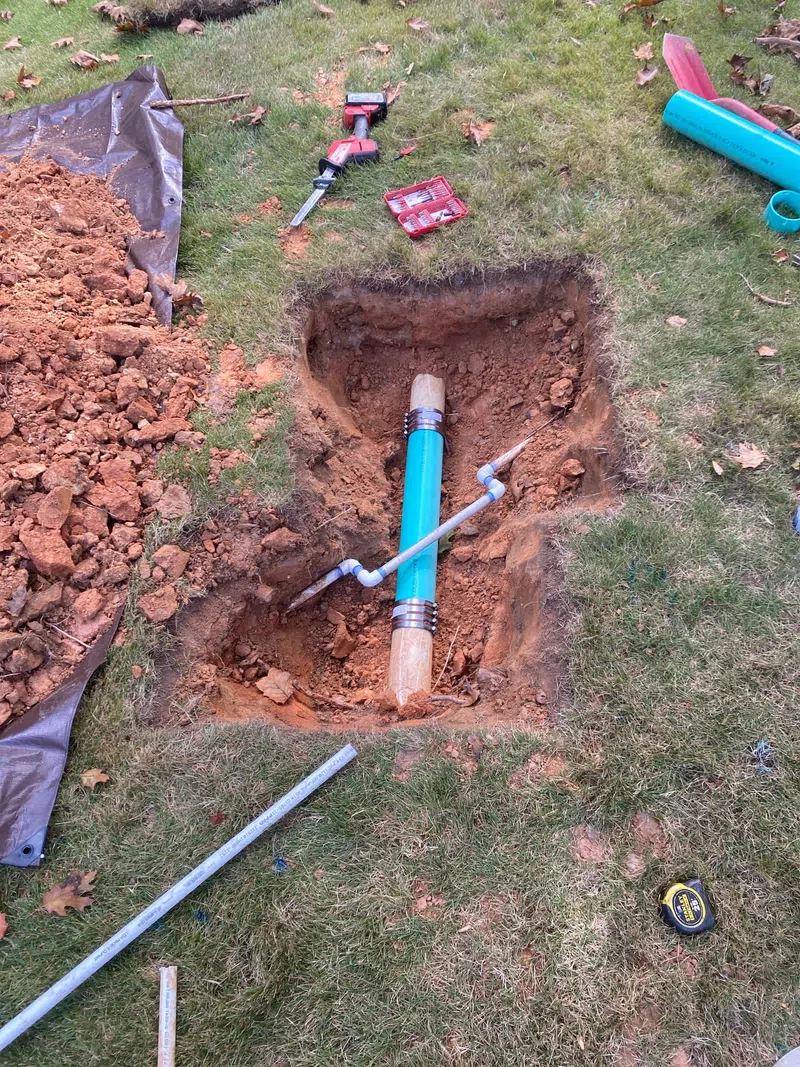
The gutters were clean. The downspout was clear. And after every decent rain, water still pooled at the same corner of the house.
What was different about this fall? A brand-new irrigation system in the front yard, put in by an irrigation contractor a few weeks earlier. (PV doesn't install irrigation. We got the call afterward.)
The call: one broken line, and a smart second request
The homeowner, in Atlanta's Lindridge-Martin Manor neighborhood, had done his homework. He knew the downspout drain in the front yard was broken, and he had a good idea why. He asked us for two things: put a camera in the broken line, and check the other downspout lines while we were there.
That second request is the one most people don't think to make. It's also the one that saved him a second visit.
What Devin found
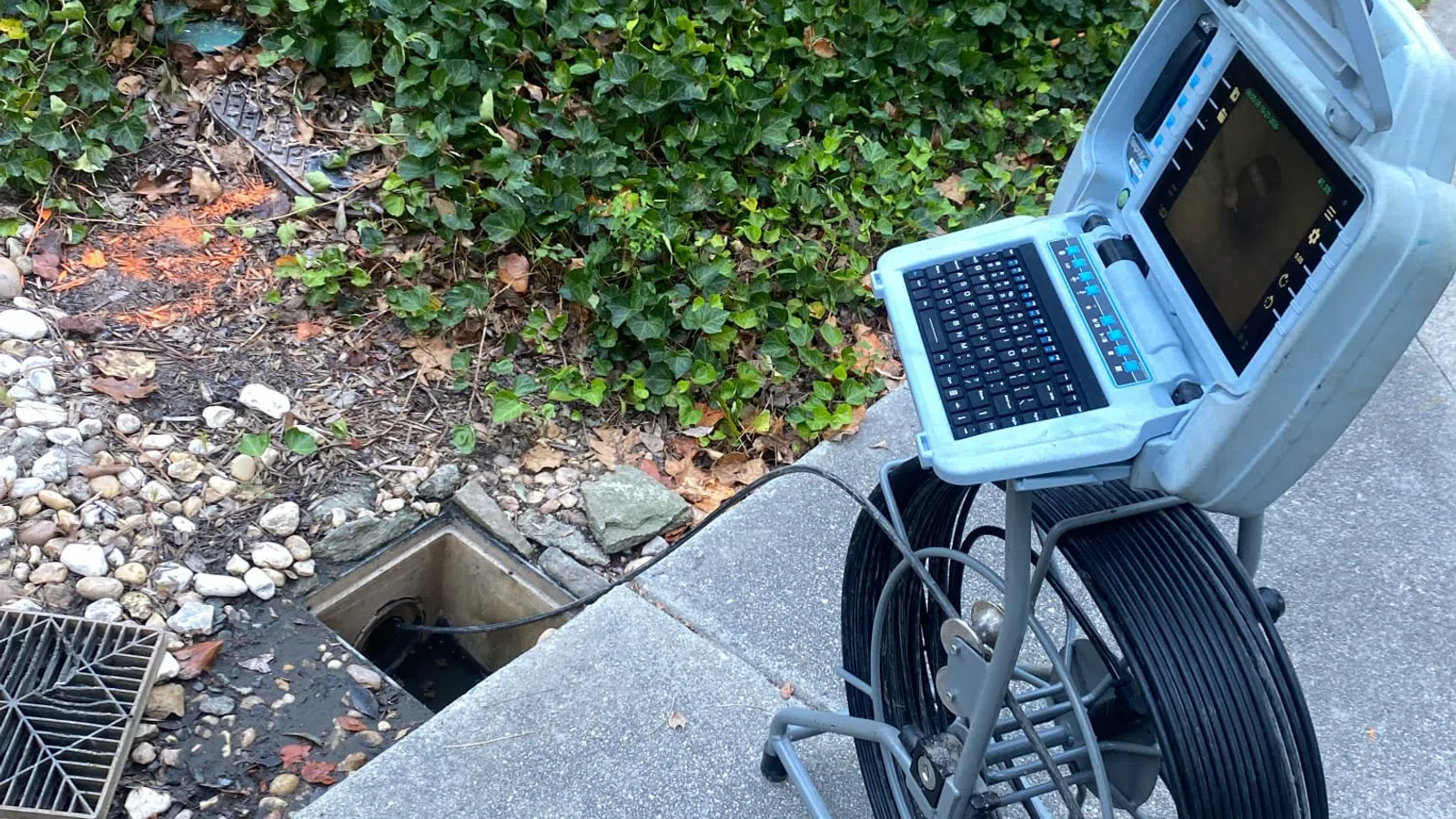
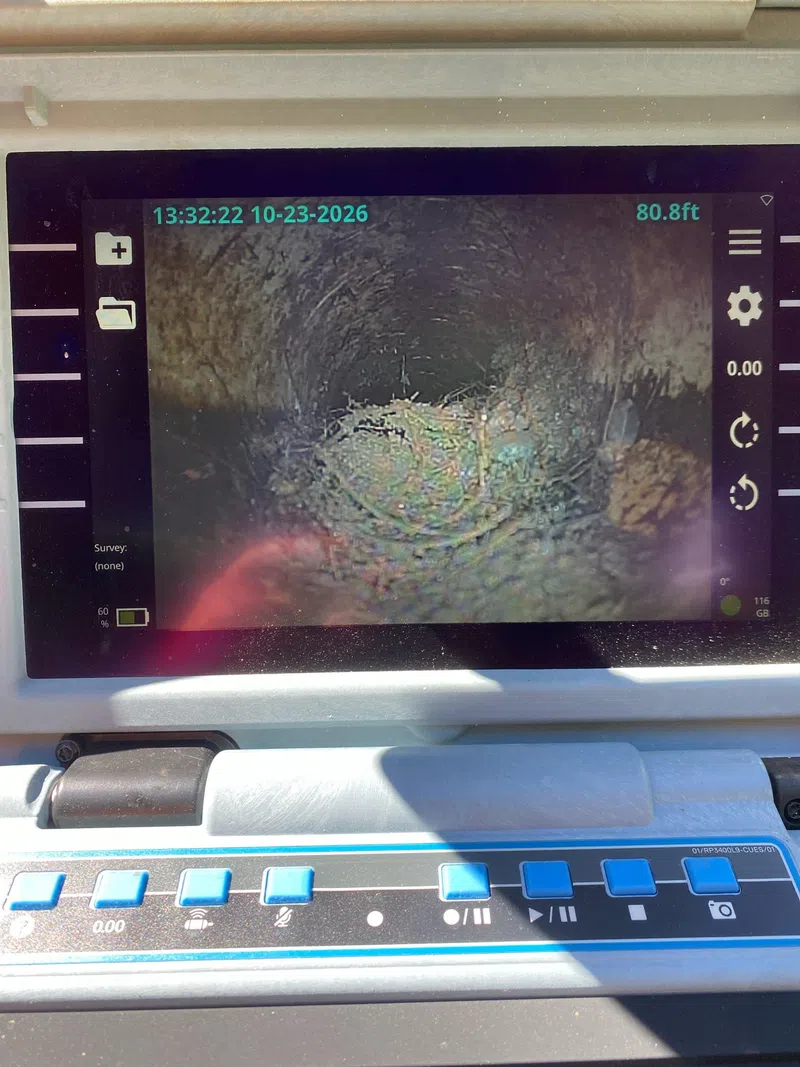
Devin, one of our plumbers, started where we always start on a yard drain: with the camera, before anyone picks up a shovel.
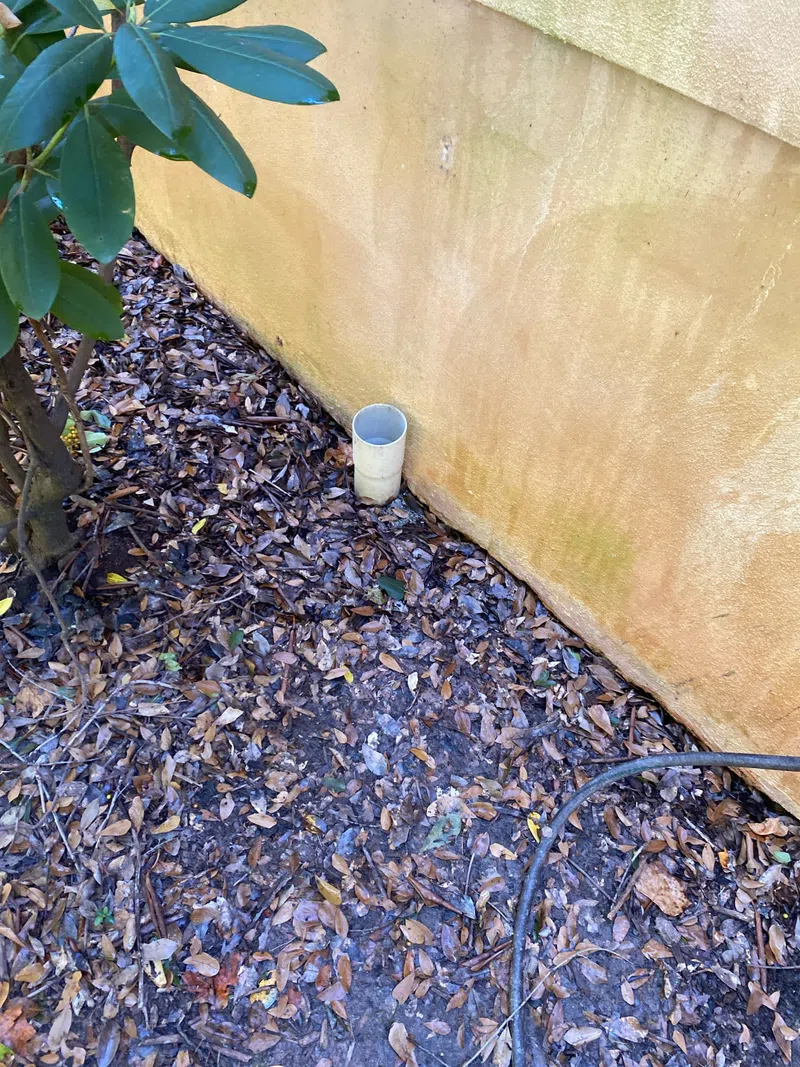
The house's downspouts feed 4-inch PVC drain lines buried in the yard, with grate inlets along the way to catch surface water. Good pipe, the kind we'd put in ourselves.
(Our plumbers call it the storm drain. Most homeowners call it the downspout drain or the gutter drain. Same pipe.)
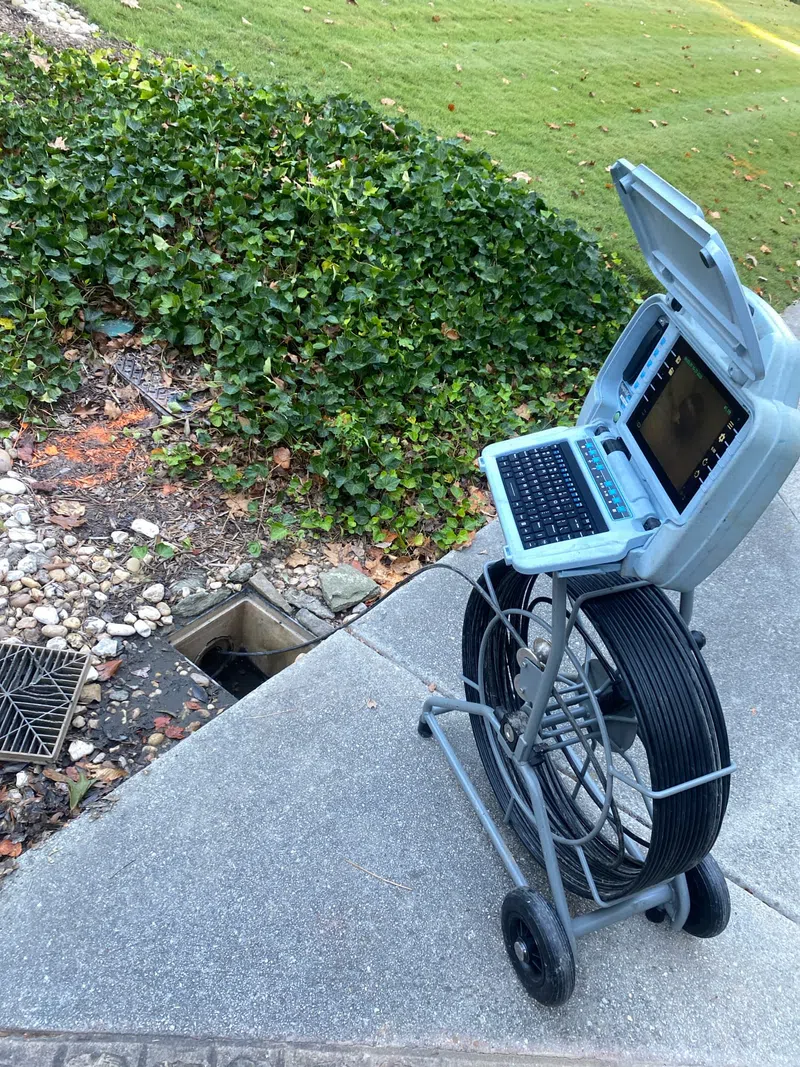
The camera went in at the inlet grate by the mailbox. Forty feet up the hill, it ran straight into a white irrigation pipe crossing the inside of the drain.
Not next to it. Through it.
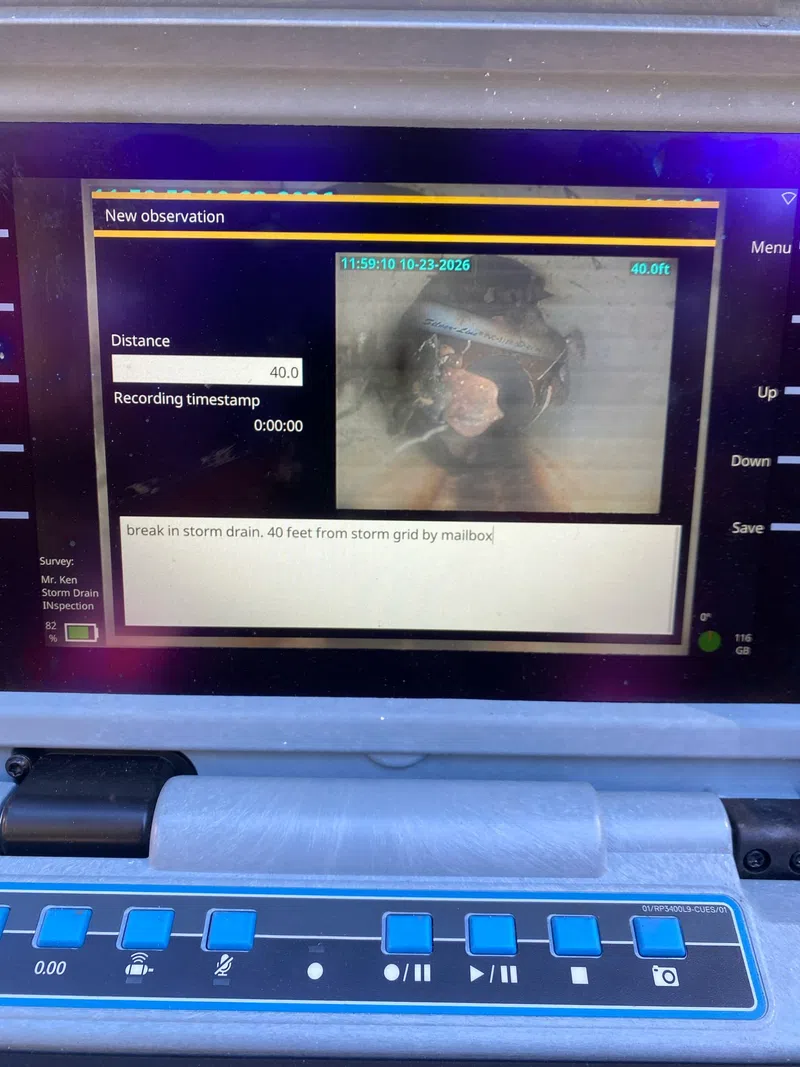
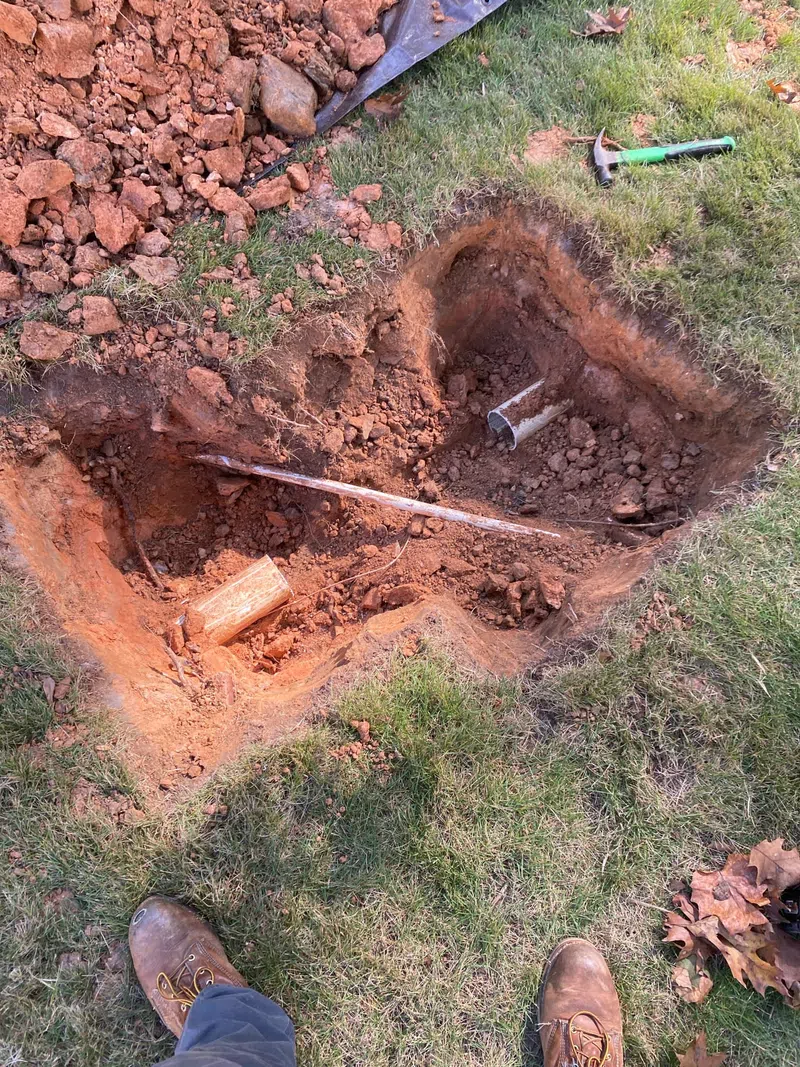
The irrigation contractor's crew had trenched a new line across the front yard, right where the drain ran. Their pipe went in; the drain pipe got cut on the way.
Every rain since, roof water had been dumping into the soil at that spot instead of carrying on to the end of the line. Hence the puddle.
Why wasn't the drain line marked before the dig? In most yards, it isn't. Here's why.
- Georgia 811 marks public utilities, usually up to the meter.
- Irrigation lines, buried downspout drains, and the sewer line between the street and your house are private. Georgia 811 says so plainly: they're the property owner's responsibility.
- Want them marked? Hire a private locator, or keep your own map.
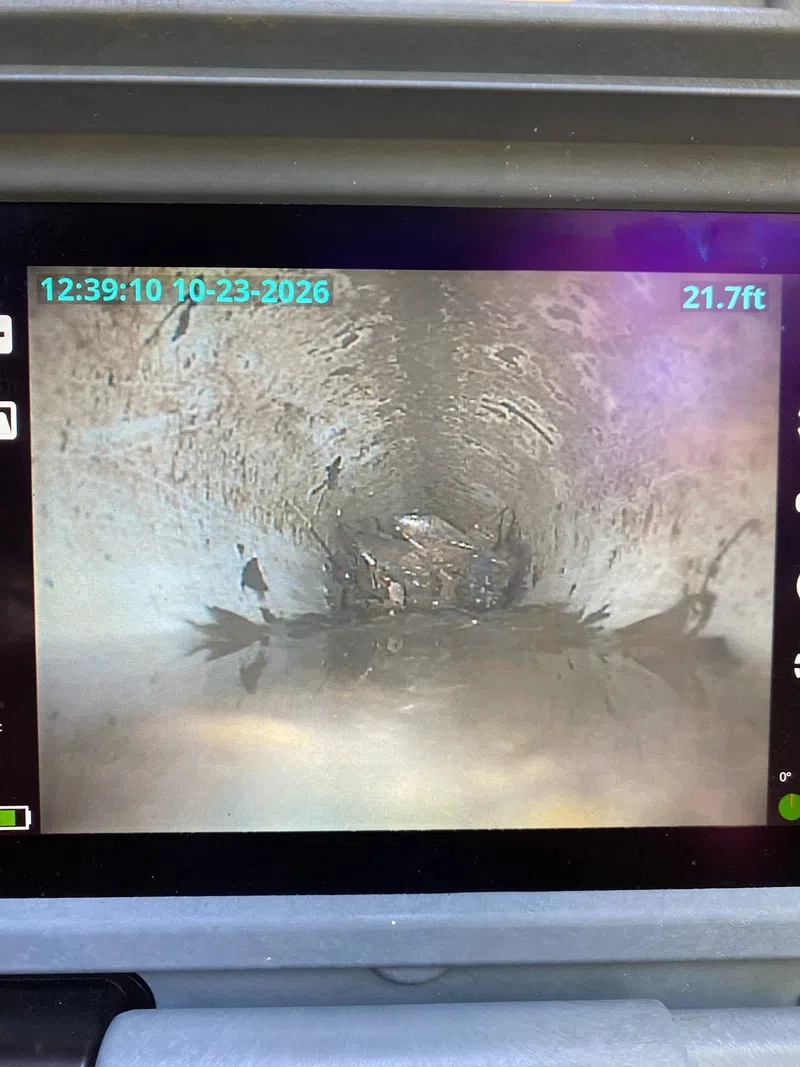
Then the other lines. The camera found what November in Atlanta finds in most buried downspout lines: leaves.
Years of them, packed at the bends and sitting in standing water. And in the back yard, another section of pipe that needed a spot repair of its own.
One broken line is a repair. A full set of lines on camera is a plan.
The choice we gave him
Three honest paths, and the camera footage to judge them by:
| Path | What it is | What it solves | Investment |
|---|---|---|---|
| Fix the break | Spot repair the front yard line where it was cut, and reroute the irrigation line so the two never meet again | The puddle. The other lines stay as they are | Lowest |
| Fix the break, clear the rest | Everything above, plus hydro jetting the other downspout lines | The puddle, and the leaves before they become the next call | Middle |
| Fix everything the camera found His call | Spot repairs front and back, the irrigation reroute, hydro jetting on all five downspout lines | Every problem on the footage, in one visit | Most complete |
He went with the full option. His reasoning is the reasoning we'd use at our own houses:
- The crew was already there.
- The trench was already open.
- The camera had just shown him the other lines weren't far behind.
Fixing one corner of the house and ignoring the rest is how we end up back in your yard in January.
What the fix included
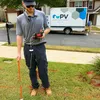
Here's Devin at the hole, before the dig, explaining the plan in 30 seconds:
"Dig on each side, cut the irrigation here, cut it over there, 90 down under, and call it a day." Here's what that meant in practice:
- Spot repairs in smooth-wall PVC. We matched the existing 4-inch line with thin-wall PVC drain pipe (Schedule 20, as Devin says in the video), not corrugated black pipe. (Corrugated is what most Atlanta yards have. It crushes, it holds leaves in its ridges, and it does not like a hydro jet.)
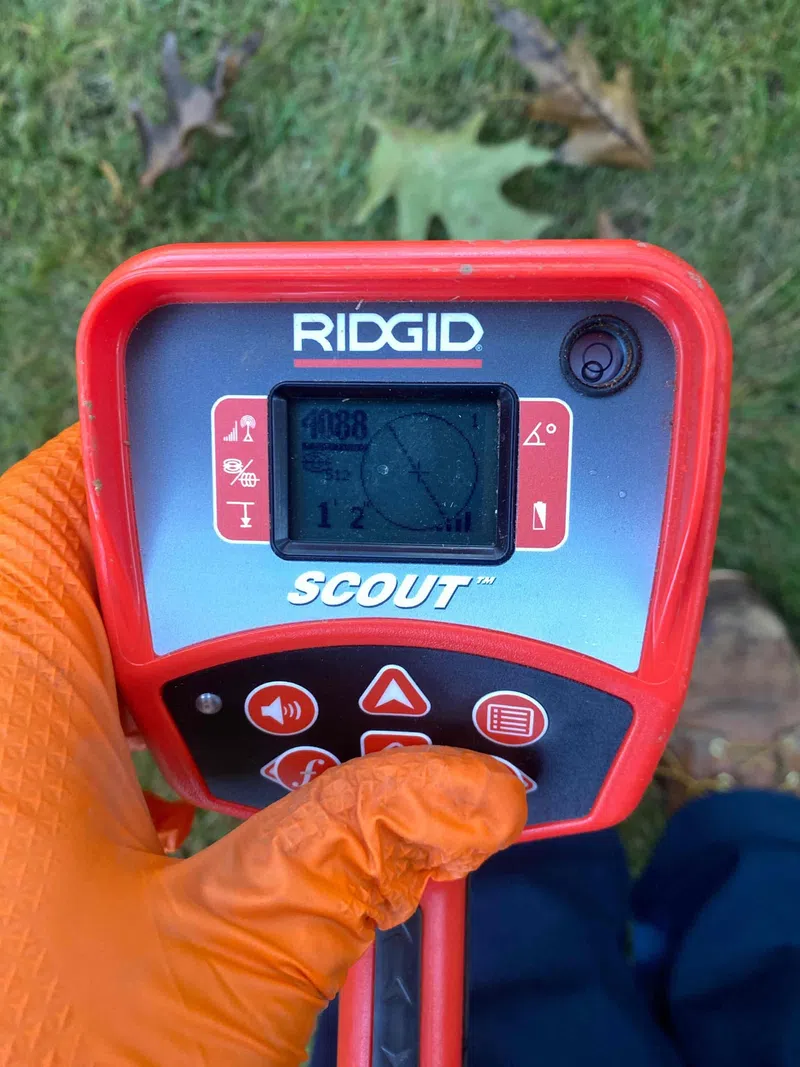
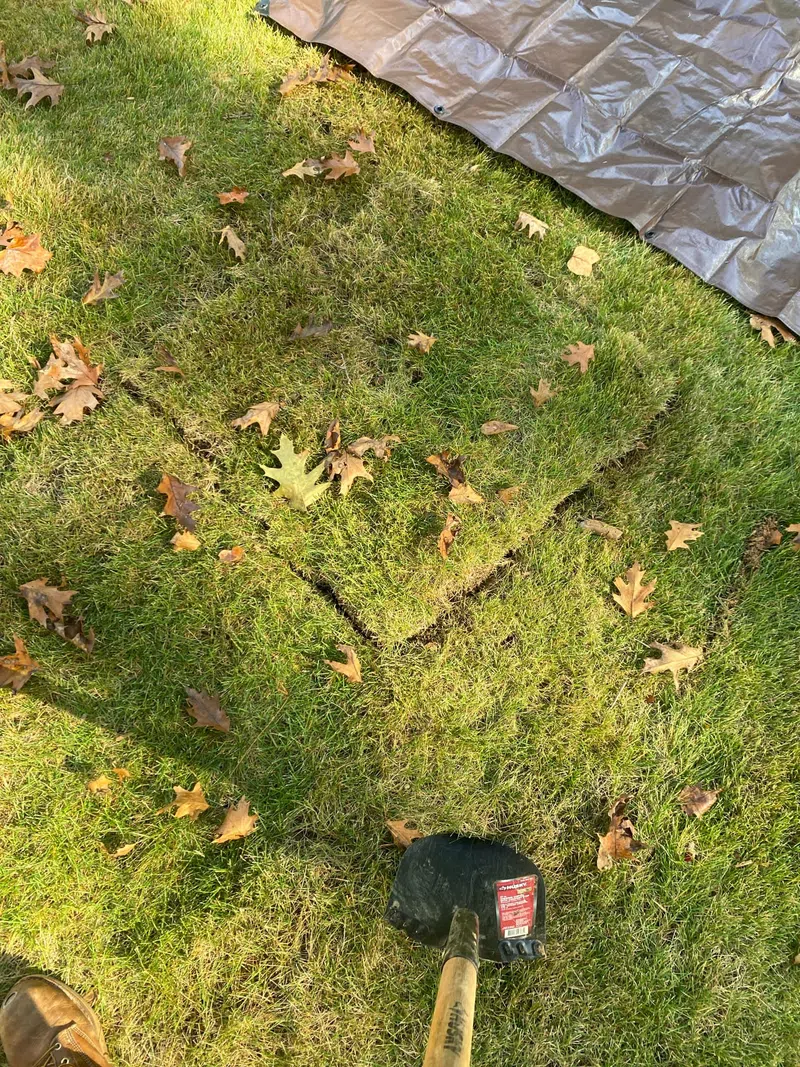
- One hole, not a trench. A locator picks up the camera head from the surface, so Devin dug exactly where the break was and nowhere else. The sod went back the way it came out.
- Fall maintained. A buried drain line only works because it runs slightly downhill the whole way. Plumbers call that slope "fall." If a repaired section sags even an inch, water stops at the low spot, leaves settle into it, and that's where the next clog starts. That low spot is what we call a belly. Devin set the new pipe to the same slope as the line on either side of it.
- The irrigation line rerouted. Devin cut it on both sides of the drain and dropped it with two 90s so it now passes underneath, not through.
- Hydro jetting on the downspout lines. Three on the side of the house, two in back, scoured out with high-pressure water. A cable can poke a hole through leaves. A jet removes them.
- A second camera pass. After the repairs, Devin ran the camera again and saved the footage. Proof the work is right, and proof for the homeowner if the irrigation company ever asks what happened.
Devin's rule for anyone about to dig
"Before anybody digs in your yard, know where everything is. Downspout drains, irrigation, the sewer line, the gas line to the grill. 811 doesn't mark any of that. If you don't know where a drain runs, we can put a camera in it and show you."
Devin, PV plumber on this job
Two pipes, two destinations
Here's the part most homeowners never think about. Your house is connected to two completely separate drain systems, and they end in very different places.
- The sanitary sewer takes everything from your sinks, toilets, and showers to a treatment plant.
- The storm drain takes rain from your roof and yard to the nearest creek. No plant. No filter.
Atlanta's Department of Watershed Management says it plainly: stormwater runoff is carried "to the nearest stream, lake or river," and whatever it picks up on the way goes with it. (Which is also why leaves, grass clippings, and anything you wouldn't want to swim in shouldn't go down a yard grate.)
That's why the two systems can't mix. Roof water tied into a sanitary sewer floods it in a hard rain and causes sewage overflows, a problem Atlanta has spent decades fixing under federal consent decrees.
The plumbing code Georgia uses is blunt about it: storm water shall not be drained into sewers intended for sewage only.
(The exception is a 19-square-mile area centered on Downtown, where the city's oldest sewers were built to carry both. The rest of the city runs on separate systems.)
What it means for you: a downspout line should end at daylight, like a pop-up emitter, the curb, or a swale, never at a sewer cleanout. Older intown homes sometimes have a downspout that was tied into the sewer line decades ago. The camera finds that too.
A note on November
Atlanta's leaves are coming down right now, and every one that lands on a roof is headed for a downspout. Gutter guards help. A clean gutter helps.
But the buried part of the system is the part nobody sees, and it's where leaves go to stay. Signs the line underneath is telling you something:
- A downspout that gurgles during a rain
- Water overflowing at the top of a downspout
- Water showing up at the same corner of the yard after every storm
The fix starts with a camera, not a guess. Jetting a broken line just pushes water into the break.
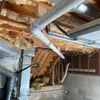
The job, in photos
The bottom line
Pooling water next to a house with clean gutters is almost always an underground problem, and a camera finds which one in minutes. In this case it was a cut from a dig nobody could have marked, plus a few years of leaves nobody could have seen.
And it isn't a cosmetic problem. One inch of rain on a 2,000-square-foot roof is about 1,200 gallons of water, and a broken downspout line puts all of it against the foundation at one spot.
In Atlanta's clay soil, that water:
- finds its way into crawl spaces and basements
- keeps the ground under the house wet, which is where musty air, mold, and rotting framing start
- over time, can shift the soil the house sits on
A drain repair is cheap next to any of that.
If water is pooling at your foundation, a downspout is overflowing, or a yard drain has quit anywhere in Atlanta or Metro Atlanta, we'll put a camera in the line and show you exactly what we see, just like we documented here. (Every Field Notes post is a real PV job.)
Call us today at (404) 798-9672 or schedule an appointment online!
Frequently asked questions
Does Georgia 811 mark downspout drains and irrigation lines?
No. Georgia 811 marks public utilities, usually up to the meter. Irrigation systems, buried downspout drains, and the sewer line between the street and your house are private lines, and the property owner is responsible for them. Before a crew digs, hire a private locator, or have PV scope the drain line and mark where it runs from the surface, the same way Devin located this break before digging a single hole.
Why is water pooling next to my house when the gutters are clean?
If the gutters and downspouts are clear, the problem is usually underground: a buried downspout line that's packed with leaves, crushed, separated at a joint, or cut by someone digging. A camera inspection tells you which one in minutes, and it's the only way to know whether the line needs hydro jetting or a spot repair. One more thing to rule out: if the ground stays wet even when it hasn't rained, that's not a drain problem, it's a leak, and that calls for leak detection instead.
How much does a downspout drain repair cost in Atlanta?
It depends on what the camera finds. A spot repair on one cut section costs a fraction of replacing the whole run, and hydro jetting a leaf-packed line costs less than either. We quote after the camera, not before, and the camera inspection is free with any drain line cleaning. PV Priority Plan members get discounted drain clearing and a free scope, and financing is available for larger repairs.
Can a buried downspout drain be hydro jetted?
Yes, if the pipe is smooth-wall PVC and intact, which is why the camera goes in first. Hydro jetting scours leaves and silt off the pipe walls with high-pressure water, where a cable only pokes a hole through them. Jetting a broken or badly crushed line pushes water into the break and solves nothing, which is the same lesson from our Marietta kitchen drain job: clearing a line and fixing a line are two different things. Corrugated pipe is a judgment call, and often not worth jetting.
Do storm drains and sanitary sewers go to the same place?
Not in most of Atlanta. Sanitary sewers carry wastewater from your fixtures to a treatment plant. Storm drains carry rain from roofs and yards to the nearest creek, untreated. Connecting the two is against the plumbing code because roof water overloads the sanitary system in heavy rain and causes sewage overflows. The exception is a 19-square-mile combined-sewer area centered on Downtown, where the oldest sewers were built to carry both. If you suspect a downspout at your house was tied into the sewer line years ago, a camera inspection confirms it, and our guide to who is responsible for sewer line repair explains where your pipe ends and the city's begins.
How do I find out where my downspout drain line runs?
Have it scoped. A camera goes in at a downspout inlet or a yard grate, and a handheld locator picks up the camera head from the surface, so we can mark the line's path and depth across the yard with paint or flags. It's the same tool Devin used to dig one hole over this break instead of a trench. Do it before an irrigation install, a fence, a patio, or any landscaping that involves a trencher, and keep the map. Camera inspections are free with any drain line cleaning.
Does PV repair downspout and yard drain lines in Atlanta?
Yes. PV Heating, Cooling & Plumbing handles camera inspections, hydro jetting, and spot repairs on downspout and yard drain lines throughout Atlanta, including intown neighborhoods like Lindridge-Martin Manor, and across Metro Atlanta. Our Atlanta plumbers also handle the sewer side of the yard, from tree root intrusion to sewer line replacement. Every Field Notes post is a real job like this one.