Most water heaters don't announce their retirement. They just quit, usually on a Monday morning, usually right before a hot shower.
This is the story of one that never got the chance.
A homeowner in the Ellard neighborhood of Alpharetta had an electric water heater that still worked fine. But it was getting up there in age, and they'd done the math on what "fine, until it isn't" costs in a two-story house. So they called us before it failed, not after.
That one decision changed everything about how this job went. They got to compare options instead of taking whatever was on the truck. They got to pick their warranty. And the install happened on their calendar, not the water heater's.
Here's the whole job, documented: what we found, the options we laid out, what the homeowner picked, and what a done-right replacement actually includes. (This is a real PV job. The photos are from our own install.)
The call: two questions
The homeowner reached out with two questions. "Is it time to replace my water heater?" And "does PV offer financing?"
The second one was easy: yes. The first one is never a guess, so we scheduled a free consultation and headed to Ellard. (If you're asking the same question about your own tank, we wrote a full guide on when to replace a water heater.)
What Devin found
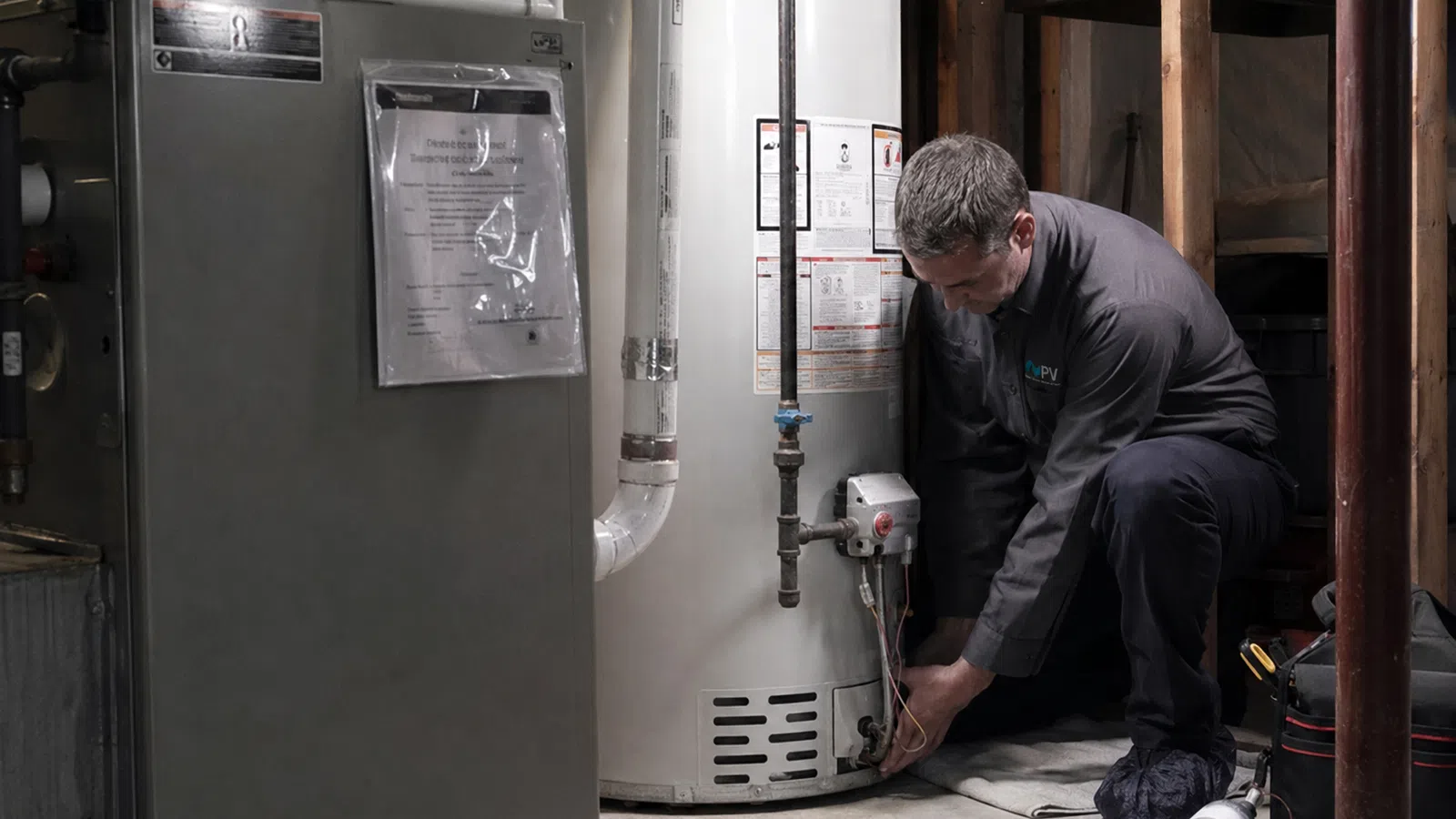
Our plumber Devin ran the consultation. The existing unit was a 50-gallon Rheem electric water heater, model PROE50 T2 RH95. It had served the family well for years, and it was still heating water. That's exactly the point: the best time to evaluate a water heater is while it still works.
At PV, we don't just look at the tank. We look at the whole system around it: how the home is protected if the tank ever leaks, how thermal expansion is handled, where the relief valve discharges, and whether the setup meets current code. A water heater is only as good as the system it lives in.
Here's what the inspection turned up on this one:
- No drain pan under the tank
- No expansion tank anywhere on the system
- A T&P relief valve discharge that stopped at the tank instead of running outside
- No leak detection of any kind
None of that is unusual. (Code moves forward; old installs don't move with it.) But in a two-story home, every one of those gaps is the difference between a contained problem and a ceiling repair.
A note on Ellard
If you live in Ellard, this story probably sounds familiar. The neighborhood's homes were largely built in the late 1990s and early 2000s, which means a lot of them are on their original water heater, or their first replacement, right about now. Water heaters age in cohorts: when one neighbor's tank hits retirement age, the whole street's are close behind.
And these are big, finished homes along the Chattahoochee, often with the water heater sitting above living space. A slow failure here doesn't just cost you a tank. It costs you drywall, flooring, and weeks of repair. In this neighborhood, replacing on your own schedule isn't a luxury. It's the cheap option.
Three options, no pressure
We don't believe in one-size-fits-all, and we don't believe in showing up with a single number. Devin laid out three options:
| Option | Equipment | Warranty | Investment |
|---|---|---|---|
| Economy | Reliable 50-gallon electric tank | 10-year parts, 2-year labor | Lowest upfront cost |
| Standard Their pick | Bradford White 50-gallon electric tank | 10-year parts, 10-year labor | $2,200-$2,700 installed |
| Hybrid | Heat pump water heater, the most energy-efficient of the three | 12-year parts | Highest upfront, lowest bills |
Quick word on the hybrid: instead of making heat with electric elements alone, it pulls heat from the surrounding air and moves it into the water. Less electricity, lower bills, and Georgia rebates can take a real bite out of the upfront cost.
Each one is a solid choice, and financing is available on all three. The right one depends on what matters most to you.
Why they chose the middle option
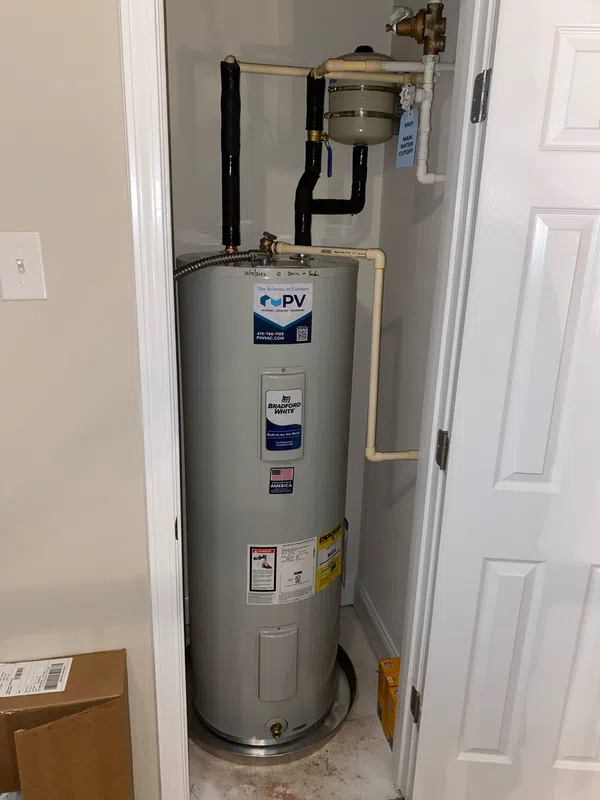
The homeowner went with the Standard option: a Bradford White electric water heater, model RE250T6.
The deciding factor? Ten years of parts AND labor coverage. If anything goes wrong over the next decade, it's covered, and so is the visit to fix it. For a lot of families, that peace of mind is worth more than anything else on the spec sheet. (It's the same logic we walk through in our repair-or-replace guide: the warranty you choose today is the repair bill you don't get in year seven.)
What the install included
A new tank is only part of the job. Here's everything that went in:
- New Bradford White 50-gallon electric water heater
- New drain pan
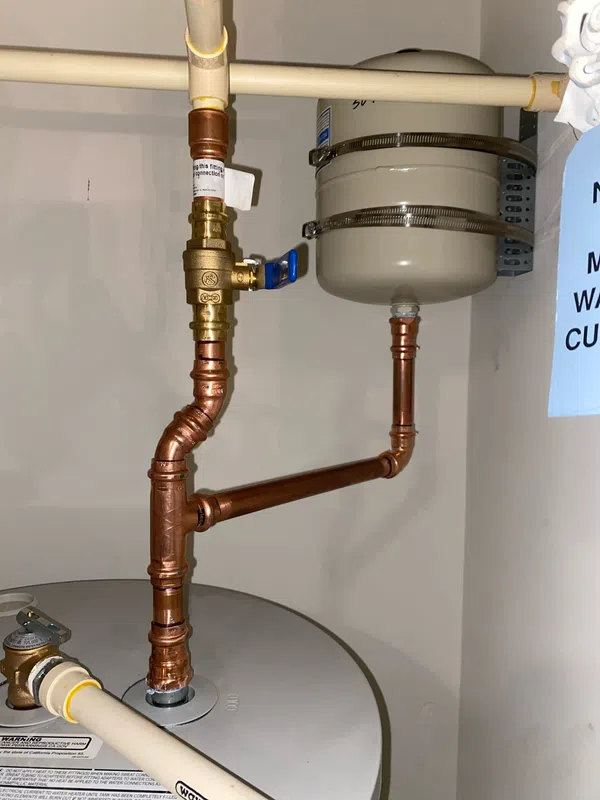
- Expansion tank, properly strapped
- All new copper fittings for the reconnection
- T&P relief valve discharge piped to the outside
- Water leak alarm
- Everything installed to current code
Why the "extras" aren't really extras
These details are the difference between a water heater swap and a water heater installation done right.
Drain pan. If a tank ever leaks, the pan catches the water and directs it away instead of letting it soak into floors, drywall, or the ceiling below.
Expansion tank. When water heats up, it expands. In many homes, that extra volume has nowhere to go, which puts stress on the tank, the fittings, and your fixtures. The expansion tank gives it somewhere to go. We strap it so it stays put for the long haul.
Copper reconnection. Durable, reliable connections built to last as long as the water heater does.
T&P discharge piped outside. The temperature and pressure relief valve is a critical safety device. If it ever opens, piping it outside means scalding water goes somewhere safe, not across the floor. (And never cap a T&P valve. Ever. Here's why that valve matters more than people think.)
Water alarm. A small device with one job: if water shows up where it shouldn't, it says so, loudly, while the problem is still small.
"Tanks almost never warn you. The ones we replace on a schedule go out clean. The ones that fail pick the worst week of the year, and they usually take some drywall with them. If yours is past ten years old, have somebody look at the whole setup, not just the tank."
Devin, PV plumber on this job
The bottom line
If your water heater is getting up in years, don't wait for it to make the decision for you. A free consultation gets you an honest look at your current unit and the system around it, clear options at different price points, and straight answers on warranties, efficiency, and financing.
Whether you're in Ellard, elsewhere in Alpharetta, or anywhere in Metro Atlanta, we'll document the job like we documented this one.
Call us today at (404) 798-9672 or schedule an appointment online!
Frequently asked questions
Should I replace my water heater before it fails?
If it's getting older, planning ahead is usually the smarter move. You get time to compare options, choose the right warranty, and schedule the install on your terms, instead of making a rushed decision with no hot water. This Ellard homeowner is the proof: three options, their choice of warranty, zero emergency.
How much does a water heater replacement cost in Alpharetta?
On this job, the homeowner's pick, a quality 50-gallon tank installed to current code with a new pan, expansion tank, and fittings, landed in the $2,200 to $2,700 range. Economy options run less, hybrids run more before rebates, and every home is a little different, which is why we quote after a free consultation rather than over the phone.
What's the difference between a standard tank and a hybrid water heater?
A standard electric tank heats water with electric elements. A hybrid, or heat pump water heater, pulls heat from the surrounding air and moves it into the water, which uses far less electricity. Hybrids cost more upfront but are the most energy-efficient option, and Georgia rebates can offset part of the cost.
Why do I need an expansion tank?
When water heats, it expands. In many homes, that extra volume has nowhere to go, which puts stress on your water heater and plumbing. An expansion tank absorbs it and protects the whole system.
Does PV replace water heaters in Alpharetta?
Yes. PV Heating, Cooling & Plumbing installs and replaces water heaters throughout Alpharetta, including Ellard, along with the rest of North Fulton and Metro Atlanta. Every replacement starts with a free consultation and a look at the full system, not just the tank.