Most of us assume the air inside our homes is cleaner than what's outside — especially during Atlanta's infamous pollen season. But according to the EPA, that assumption is wrong. Studies show that indoor air pollutant levels are typically 2 to 5 times higher than outdoor levels, and in some cases, up to 100 times higher. That holds true whether you live in the city or the suburbs, near a highway or in a quiet neighborhood.
So what's going on? Modern homes are built tight for energy efficiency — which is great for your utility bill, but it also means pollutants from everyday life get trapped inside and recirculate through your HVAC system again and again.
In This Guide:
- The Usual Suspects: What's Polluting Your Indoor Air
- Start Here: Get an Air Quality Monitor
- How to Improve Your Indoor Air Quality
- Upgrade to a MERV 13 Filter
- UV-C Germicidal Light
- Whole-House HEPA Air Cleaning
- Energy Recovery Ventilation
- The Other Side: Your Ducts & Envelope
- Duct Cleaning
- Air Sealing & Aeroseal
- Insulation
- Where Should You Start?
- Frequently Asked Questions
The Usual Suspects
You might be surprised at how many pollutant sources are already in your home:
- Cooking is one of the biggest. Research shows that frying, searing, or roasting food can spike fine particle levels (PM2.5) in your kitchen to concentrations that rival some of the most polluted cities on earth — sometimes within minutes. And those particles don't stay in the kitchen. They travel through your ductwork to every room in the house. Studies have found that ultrafine particle levels can climb 10 to 40 times higher after cooking.
- Pets shed dander and hair that's small enough to pass right through a standard 1-inch furnace filter. If you have pets and allergies, your filter is probably working against you.
- Household products — cleaners, paints, new furniture, even candles and air fresheners — release volatile organic compounds (VOCs), invisible gases that can cause headaches, irritation, and fatigue.
- Pollen and outdoor allergens sneak in every time a door opens, settle into your ductwork, and recirculate for days.
Here's the catch: in Atlanta, you can't just open a window to clear things out. Not when it's 95 degrees and humid in July, and not when the pollen count is off the charts in March. Your home needs help from the inside.

Start Here: Get an Air Quality Monitor
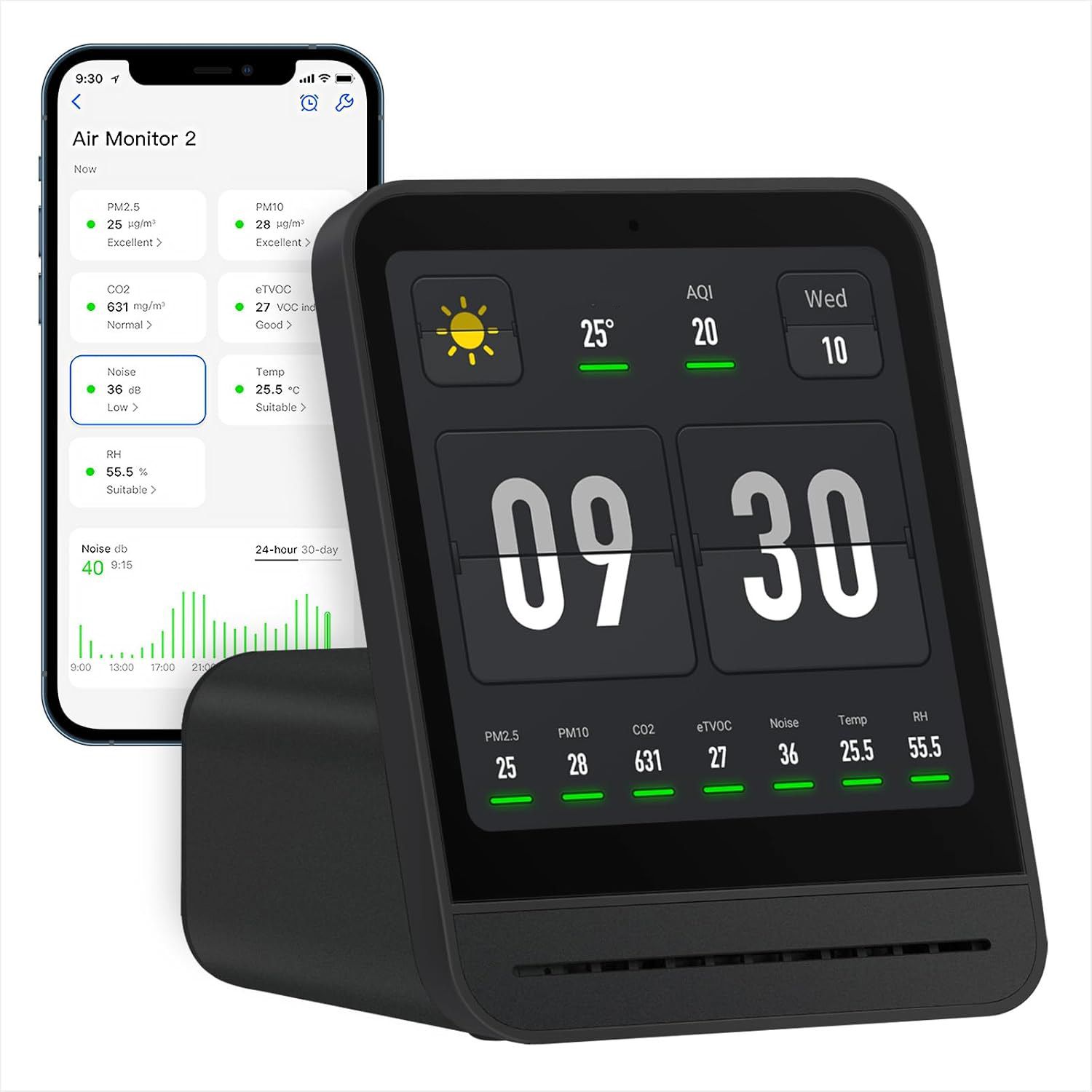
Before spending a dollar on equipment, try this: pick up a home air quality monitor. Good ones run around $100 and measure PM2.5, VOCs, temperature, and humidity in real time.
Set it in your kitchen and cook dinner. Watch the PM2.5 number climb. Move it to your living room and see how fast particles spread through the house. Let your dog hang out near it. Light a candle. The numbers will surprise you — and they'll show you exactly what your current HVAC system is (and isn't) catching.
This is what we mean by The Science of Comfort® — start with data, then make informed decisions.
How to Improve Your Indoor Air Quality (Start Simple, Go From There)
Here's the good news: you don't need to overhaul your entire system to breathe better air. Even a single upgrade can make a noticeable difference. Below are four options we install, roughly in order from simplest and most affordable to most advanced. Most of our customers start with one or two, and many stop there because the improvement is that significant.
One important note: these aren't off-the-shelf products you pick up at a hardware store. Each one needs to be properly sized, positioned, and integrated with your specific HVAC system to work the way it should. Our technicians install these products on homes across metro Atlanta every week — on brand-new systems and retrofits alike — so this is very much in our wheelhouse. We evaluate your home individually, because ductwork layout, system type, home size, and even how your home was built all affect what makes sense and how it should be installed.
Start Here: Upgrade to a MERV 13 Filter
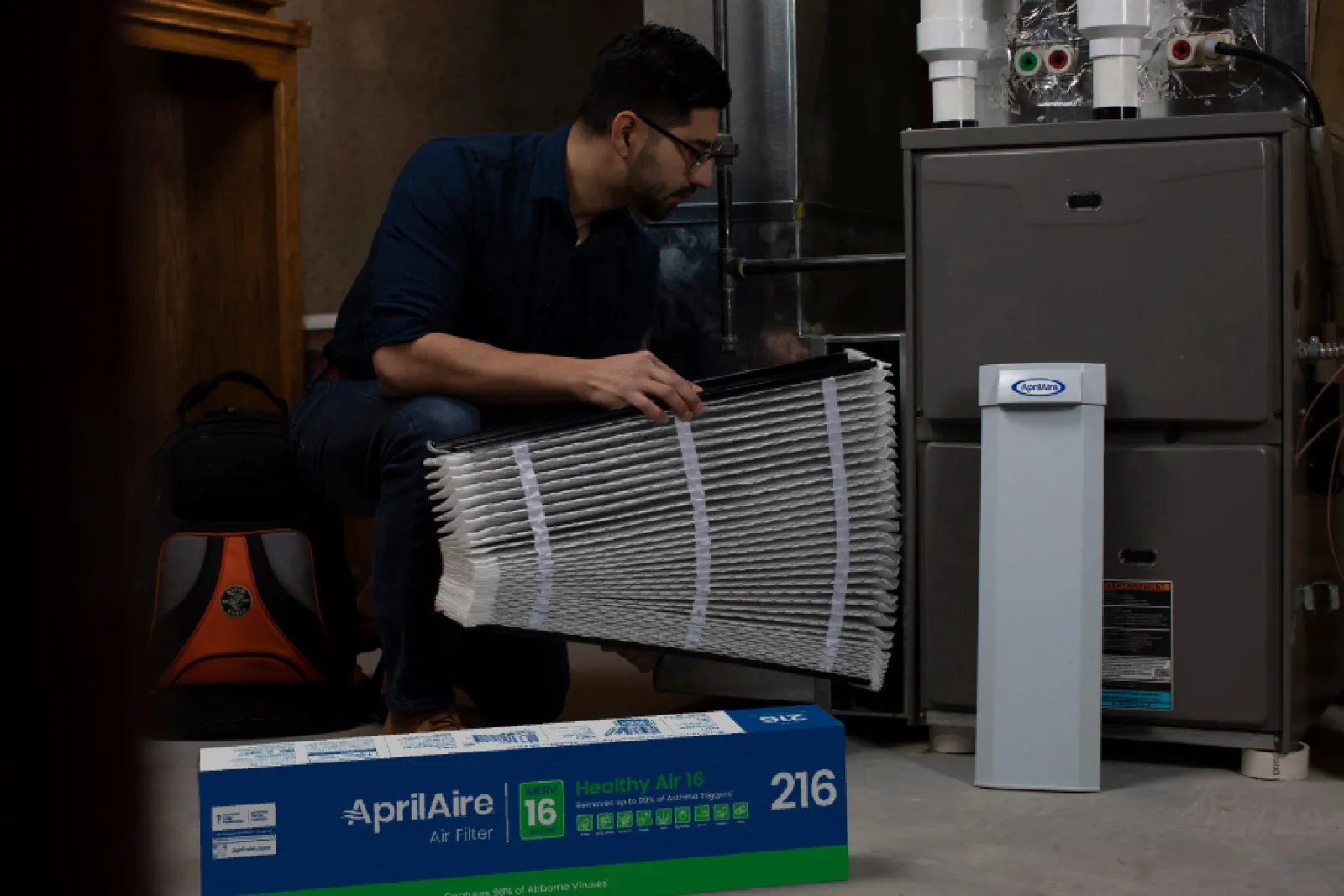
If you do one thing after reading this, make it this. Swapping your standard 1-inch filter for a 5-inch Aprilaire MERV 13 filter is the single most impactful and affordable upgrade most homeowners can make.
Here's why: a MERV 13 filter captures at least 90% of particles between 1.0 and 3.0 microns — that includes pollen, mold spores, dust mite debris, pet dander, and bacteria. The EPA specifically recommends MERV 13 as the residential upgrade target.
The 5-inch depth matters too. It provides far more surface area than a 1-inch filter, which means better airflow (less strain on your system), a longer lifespan between changes, and more consistent performance. Most homeowners we talk to are shocked at the difference just this one change makes — especially during allergy season.
We can retrofit a MERV 13 filter cabinet to most existing systems in a single visit — typically in about an hour. Our technician will evaluate your air handler, confirm compatibility, and install the cabinet so it integrates cleanly with your ductwork and doesn't restrict airflow. It's genuinely one of the easiest wins in home comfort.
Easy Add-On: UV-C Germicidal Light
If you're already upgrading your filter, a UV-C light is worth a serious look — it's affordable, low-maintenance, and tackles a completely different problem than filtration.
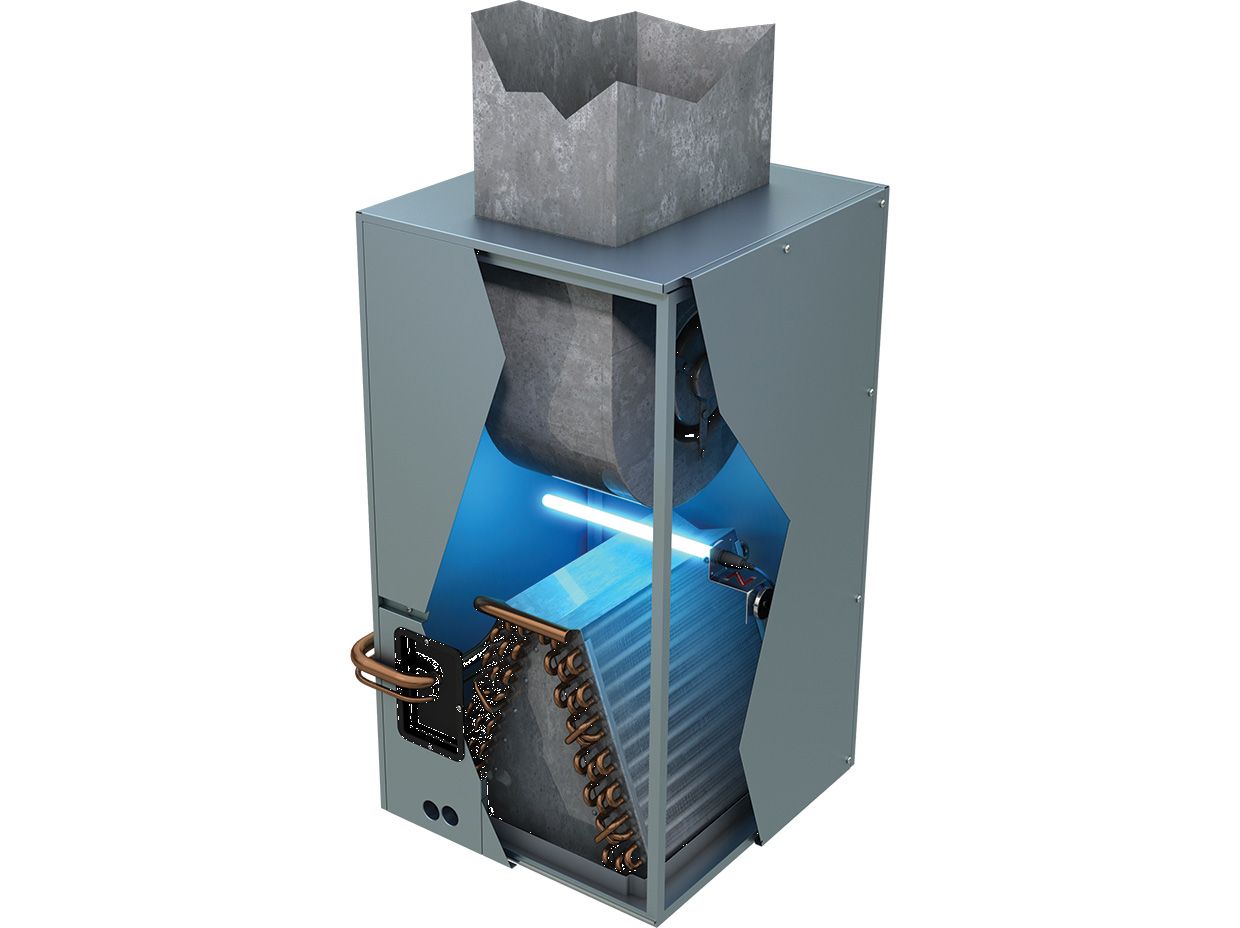
The Fresh-Aire UV Blue-Tube UV-X installs inside your air handler and targets the evaporator coil — the dark, damp surface where mold, bacteria, and biofilm love to grow. UV-C light neutralizes those organisms on contact. It's the same proven technology used in hospitals and laboratories, scaled for your home.
Placement matters here — the lamp needs to be positioned at the right angle and distance relative to the coil to be effective. Our technicians handle this as part of the install, which usually takes under an hour and is often done at the same time as a filter cabinet upgrade.
Once installed, it runs continuously with just an annual lamp replacement. There's no filter to change, nothing to think about. It simply keeps biological contaminants from growing and circulating through your air — which is especially valuable in Atlanta's humid climate where mold thrives.
Between a MERV 13 filter and a UV light, you've covered the two biggest categories of indoor air problems (particulates and biological growth) at a price point that makes sense for most families. For a lot of our customers, that's the sweet spot.
Wondering which upgrade makes sense for your home?
Most of our customers start with a MERV 13 filter upgrade and a UV light — it covers the two biggest categories of indoor air problems at a price point that works for most families. We can help you figure out the right starting point.
Going Further: Whole-House HEPA Air Cleaning
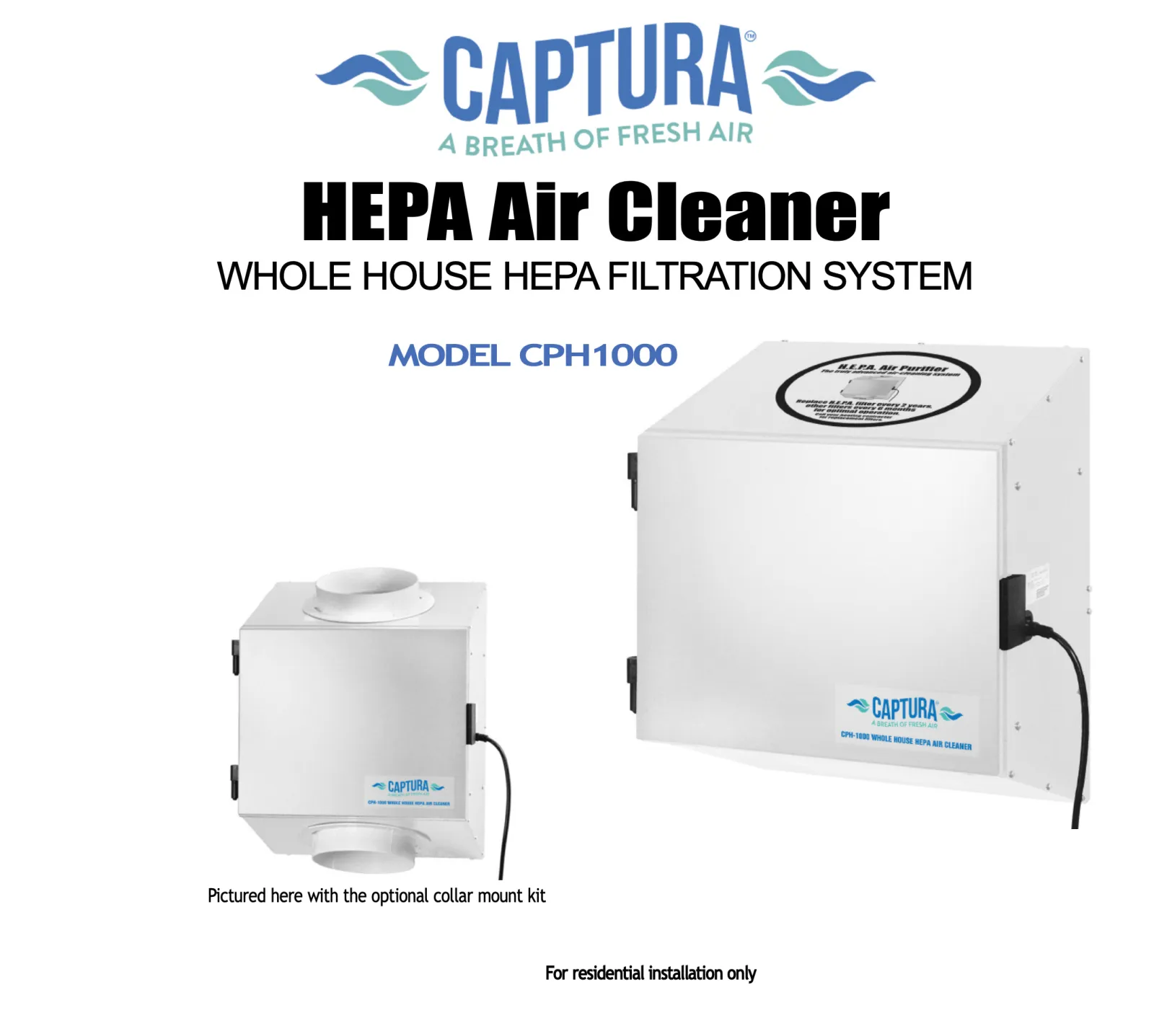
For homeowners dealing with specific concerns — heavy cooking, multiple pets, family members with asthma or severe allergies, or sensitivity to chemical odors — the Captura CPH1000 Whole-House HEPA Air Cleaner takes things to the next level.
Unlike a standard filter that sits in your air handler, the CPH1000 installs directly on the return-air side of your ductwork and has its own dedicated motor. This means it provides true HEPA-level filtration — capturing 99.97% of particles at 0.3 microns, including bacteria, viruses, mold spores, smoke, and ultrafine dust — without creating any pressure drop on your HVAC system. Your existing blower doesn't have to work harder at all. The unit also includes a carbon pre-filter that addresses VOCs and odors from cooking, cleaning products, and off-gassing materials.
Maintenance is minimal: the HEPA filter lasts approximately two years, and the carbon pre-filter is replaced about every six months. The unit comes with a 7-year warranty and features an insulated cabinet for quiet operation with two-speed settings.
Because it has its own motor and mounts to your ductwork independently, this is a professional installation — our technicians evaluate your return-air layout, determine the best mounting location, and integrate it so the unit works alongside your existing system. If the air quality monitor showed you persistent PM2.5 or VOC readings, this is the upgrade that directly addresses them.
The Premium Solution: Energy Recovery Ventilation
Everything above improves the air that's already circulating in your home. But there's one thing no filter or purifier can do: bring in fresh air.
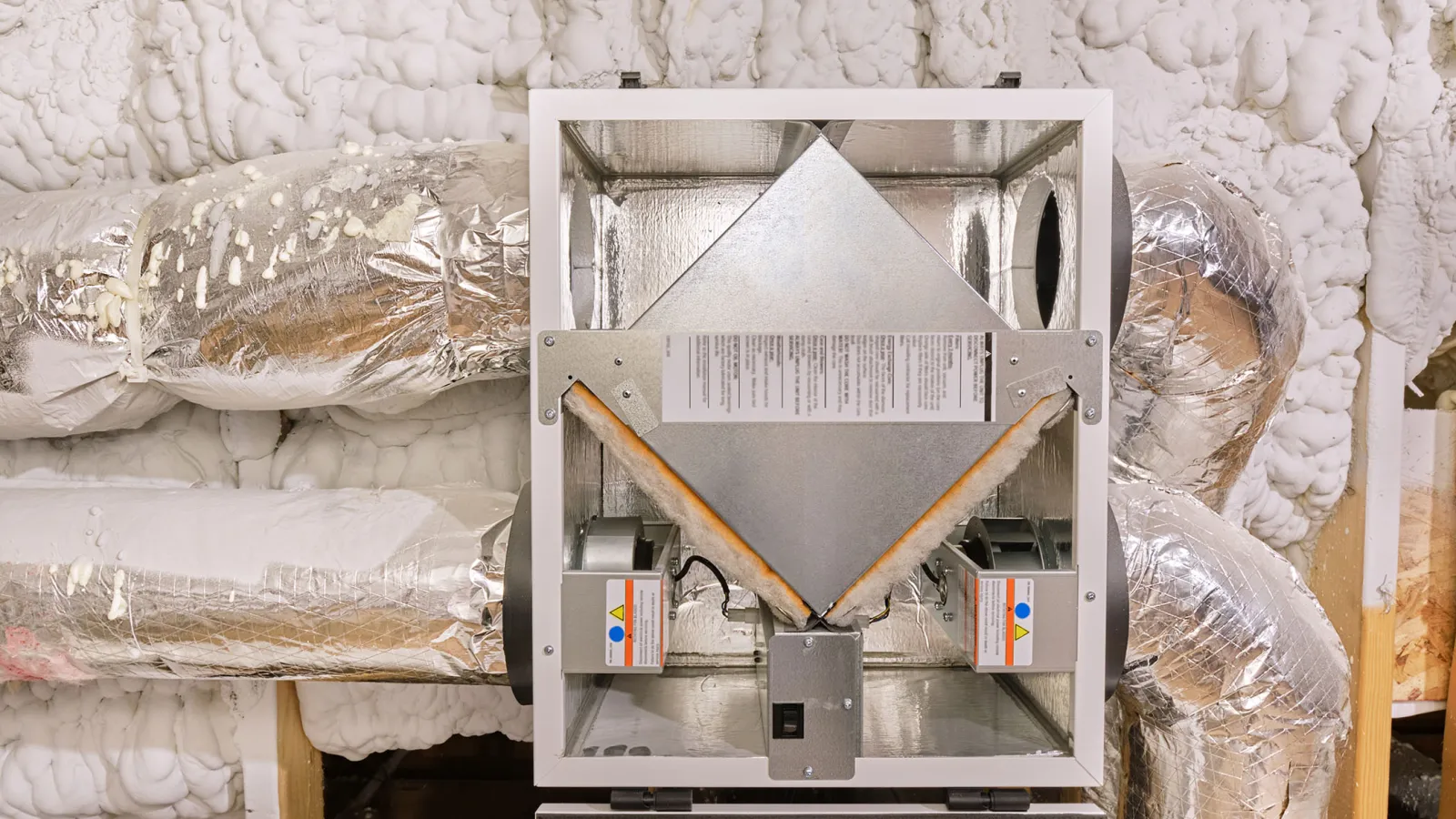
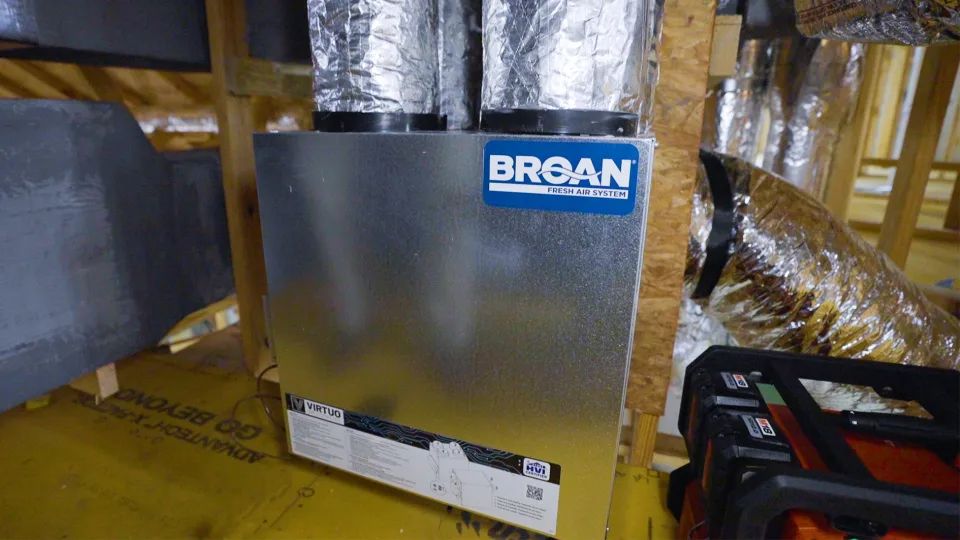
That's where an Energy Recovery Ventilator (ERV) comes in. It continuously swaps stale indoor air for filtered fresh outdoor air — while recovering up to 80% of the heating or cooling energy from the outgoing air. Incoming air arrives pre-cooled and dehumidified in summer, pre-warmed in winter. Your HVAC system barely notices.
An ERV is the solution for CO₂ buildup, lingering cooking odors, VOCs from household products, and that general "stuffy" feeling in a well-sealed home. Those contaminants need to be exhausted out of the house — no amount of filtration can remove them.
If you have a newer, tightly built home, this one deserves special attention. Modern construction creates homes that are incredibly energy-efficient but also very airtight. Without a dedicated source of balanced ventilation, your HVAC system can create negative pressure inside the home — essentially pulling air in from wherever it can find it. That might mean drawing air down through your fireplace chimney, pulling unconditioned air through wall cavities, or sucking exhaust fumes back into the house that should be going outside. This isn't just an air quality issue — it can be a safety concern with combustion appliances. An ERV solves this by balancing the pressure: it brings in the same amount of fresh air that it exhausts, keeping your home in equilibrium. In fact, some parts of the country now require ERVs or HRVs in new residential construction for exactly this reason.
This is the most significant investment of the four, and it's also the most involved to install — an ERV requires dedicated ductwork, electrical connections, and careful balancing of airflow between the incoming and outgoing air streams. This is where working with a team that understands your home as a whole system really matters. Our technicians evaluate your ductwork layout, home envelope, and existing HVAC setup to determine the right unit size and the best installation approach for your specific home. We install ERVs as standalone systems with their own ductwork or integrated with your existing HVAC — the right method depends on your home's layout and your goals.
Not every home needs an ERV. But for homeowners who are serious about air quality — especially in newer, tightly sealed homes — it's the most complete solution available. It's your home's lungs, letting it breathe without wasting the energy you're paying for.
The Other Side of the Equation: Your Ducts, Your Envelope
The products above focus on cleaning, purifying, and ventilating the air in your home. But the air can only be as clean as the system delivering it. If your ductwork is leaking, your attic isn't sealed, or your home's insulation is inadequate, you may be fighting an uphill battle. These aren't always needed, but when they are, they make everything else work better.
Duct Cleaning
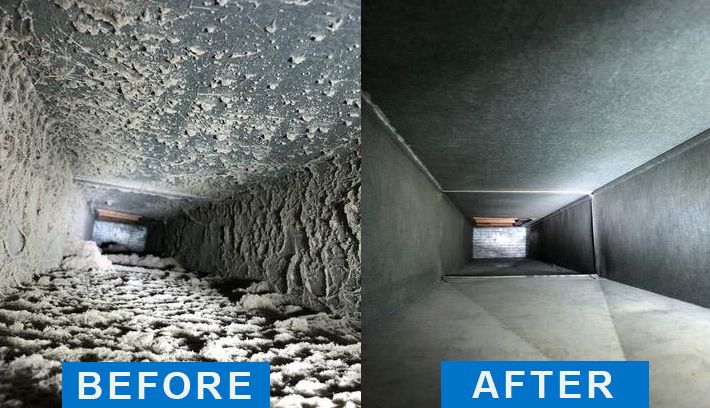
Over time, dust, pet dander, pollen, construction debris, and even mold can accumulate inside your ductwork. Every time your system runs, it circulates whatever is sitting in those ducts. We evaluate ductwork as part of our whole-home assessment and recommend cleaning when there's a genuine need — such as after a renovation, if there's visible buildup, or if occupants are experiencing unexplained allergy symptoms. Not every home needs duct cleaning on a set schedule, but when it's warranted, the difference in air quality is immediate.
Air Sealing and Aeroseal Duct Sealing
This is one of the most overlooked factors in indoor air quality — and energy efficiency. Most homes have gaps and openings in the attic where air can leak through: around recessed light fixtures, plumbing vent pipes, electrical penetrations, HVAC boots, and anywhere ductwork passes through framing. These openings allow unconditioned, unfiltered attic air — carrying dust, insulation particles, and allergens — to be drawn into your living space by your HVAC system.
We seal these penetrations as part of our air sealing service, which not only improves air quality but also reduces the load on your HVAC system by preventing conditioned air from escaping and unconditioned air from leaking in.
For ductwork specifically, we use Aeroseal — a technology developed at Lawrence Berkeley National Laboratory that seals duct leaks from the inside out. The process starts with a pressurization test that measures exactly how much air your duct system is losing (the Department of Energy estimates the typical home has 20-30% duct leakage). Then, a non-toxic aerosol sealant is injected into the pressurized ducts, where the particles seek out and seal leaks automatically — even in areas hidden behind walls or under insulation that would be impossible to reach by hand. You get a before-and-after report showing exactly how much leakage was eliminated. The seal is warranted for 10 years and has been tested to last over 40.
Insulation
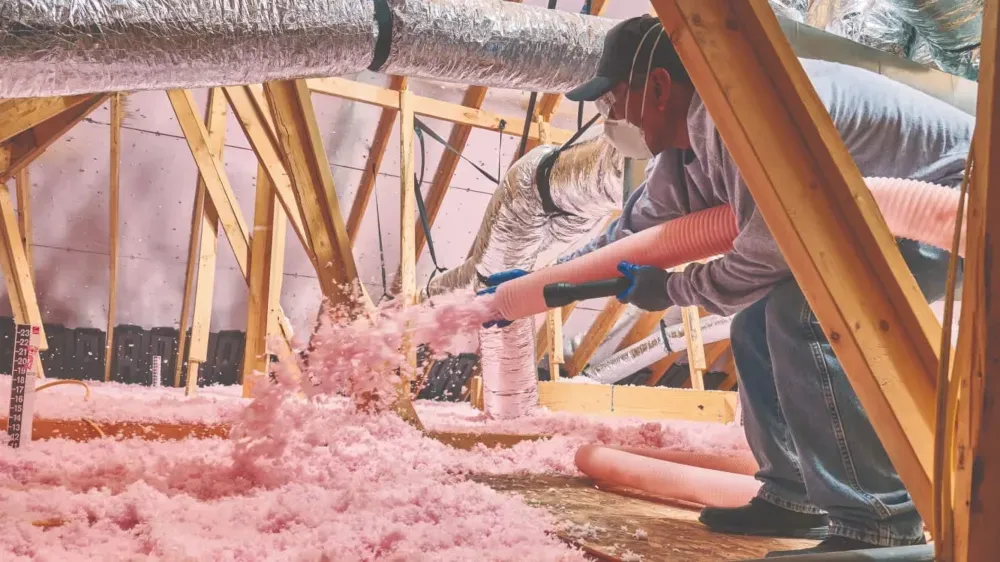
Once your attic is properly air-sealed and your ducts are tight, insulation is the final layer that ties it all together. Adequate attic insulation keeps conditioned air inside your living space where it belongs, reduces the workload on your HVAC system, and helps maintain consistent temperatures throughout your home.
In many Atlanta-area homes — particularly those built more than 15-20 years ago — attic insulation has settled, degraded, or was never installed to current standards. Adding or upgrading insulation after air sealing ensures you're not just sealing the gaps but also providing a proper thermal barrier. The result is a home that's more comfortable, more energy-efficient, and easier on your equipment year-round.
Where Should You Start?
Here's the honest answer: start wherever makes sense for your home and your budget. A MERV 13 filter upgrade alone will make a noticeable difference for most families — especially during Atlanta's spring allergy season. Add a UV light and you've addressed the two biggest categories of indoor air contaminants for a very reasonable investment.
If you have specific concerns — chronic allergies, lots of pets, heavy cooking, chemical sensitivities — then the Captura CPH1000 or an ERV may be worth exploring. And if you suspect your ducts are leaky, your attic isn't sealed, or your home has hot and cold spots, addressing the envelope and ductwork can make everything else perform better. But there's no pressure to do everything at once, and we'd never recommend something your home doesn't actually need.
Every option on this list can be retrofitted to your current HVAC system. No full replacement required.
Want to find out what would make the biggest impact in your home? Give us a call at 404-798-9672 or schedule a consultation online. We'll look at your current system, your ductwork, your home's layout, and what's actually bothering you — then recommend the right starting point. No cookie-cutter quotes, no pressure to do more than you need. Just an honest assessment from a team that's been doing this across metro Atlanta since 2008.
Because at PV, comfort isn't just about temperature — it's about the air you breathe.
The Science of Comfort®
Frequently Asked Questions
How often should I change a MERV 13 filter?
With a 5-inch media filter cabinet, most homeowners replace the filter every 6 to 12 months depending on factors like pets, allergy sensitivity, and how often the system runs. That's a big improvement over 1-inch filters, which typically need changing every 30 to 90 days. During your regular PV maintenance visit, our technician will check the filter and let you know if it's time.
Is a UV light worth it for my HVAC system?
If you live in a humid climate like Atlanta, absolutely. Your evaporator coil stays wet for much of the cooling season, creating an ideal environment for mold and bacteria to grow. A UV-C light keeps the coil clean and prevents those biological contaminants from circulating through your home. It's one of the most affordable IAQ upgrades and requires almost no maintenance beyond an annual lamp swap.
What's the difference between a HEPA filter and a MERV 13 filter?
A MERV 13 filter captures at least 90% of particles between 1.0 and 3.0 microns and fits into your air handler's existing filter slot (or a retrofitted cabinet). A true HEPA filter, like the Captura CPH1000, captures 99.97% of particles at 0.3 microns — a much finer level of filtration. Because HEPA filters are too dense for a standard HVAC blower, the CPH1000 uses its own dedicated motor and mounts to your ductwork separately, so there's no airflow restriction on your existing system.
Do I need an ERV if my home is older?
It depends. Older homes tend to be leakier, which means they naturally exchange more air with the outside — but that air comes in unfiltered and uncontrolled. Newer, tightly sealed homes benefit the most from an ERV because they have very little natural air exchange. That said, if you've recently air-sealed or weatherized an older home, an ERV can help ensure you're still getting enough fresh air. We evaluate your home's specific situation before making a recommendation.
Can these products be added to my existing HVAC system?
Yes — every product discussed in this guide can be retrofitted to your current system. You don't need a new HVAC installation to improve your indoor air quality. A MERV 13 filter cabinet and UV light can typically be installed together in about an hour. The Captura HEPA unit and ERV are more involved but are still retrofit-friendly. Our technicians do these installs across metro Atlanta every week on systems of all ages and types.
How do I know which indoor air quality upgrade I need?
Start with a home air quality monitor — it gives you real data on what's actually in your air. From there, a MERV 13 filter is the right first step for almost everyone. If you want help narrowing it down, schedule a consultation and we'll assess your home, your system, and your specific concerns to recommend the right starting point. There's no cost and no pressure.
How much do these indoor air quality upgrades cost?
Costs vary depending on your home and system, but generally a MERV 13 filter cabinet is the most affordable option, followed by a UV light. The Captura HEPA system and ERV are larger investments. We're happy to walk you through pricing during a consultation. We also offer flexible financing options for larger projects, and PV Priority Plan members save 15% on all IAQ upgrades.